
























































Lost Your Job in Japan? What Happens to Your Status of Residence?
Losing or quitting a job in Japan can be stressful, especially when your right to stay in the country is connected to employment. The good news is that your Status of Residence does not normally disappear the moment your job ends, but there are important immigration responsibilities you should understand.
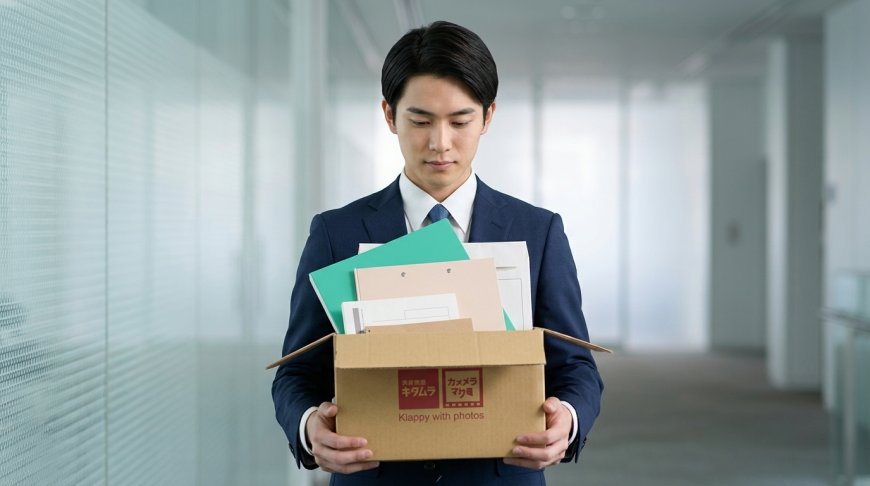
Visas After Job Loss: Fact vs. Fiction
Losing or quitting a job in Japan can be stressful, especially when your right to stay in the country is connected to employment. The good news is that your Status of Residence does not normally disappear the moment your job ends, but there are important immigration responsibilities you need to understand.
For foreign workers in Japan, losing a job can create two worries at the same time: How will I pay my rent and living expenses? Can I still stay in Japan?
Many foreign residents have heard statements such as, “If you lose your job, your visa is cancelled,” or “You only have three months to leave Japan.” These statements are misleading when presented as universal rules.
If you resign, are laid off, or lose your job for another reason, your 在留資格 (ざいりゅうしかく / zairyū shikaku), or Status of Residence, does not normally vanish immediately. However, this does not mean you can simply wait until your Residence Card expires. Depending on your Status of Residence, you may need to notify the Immigration Services Agency, continue looking for qualifying work, and make sure your activities remain consistent with the status you currently hold.
Japan Status of Residence Explained: Guide for Foreigners
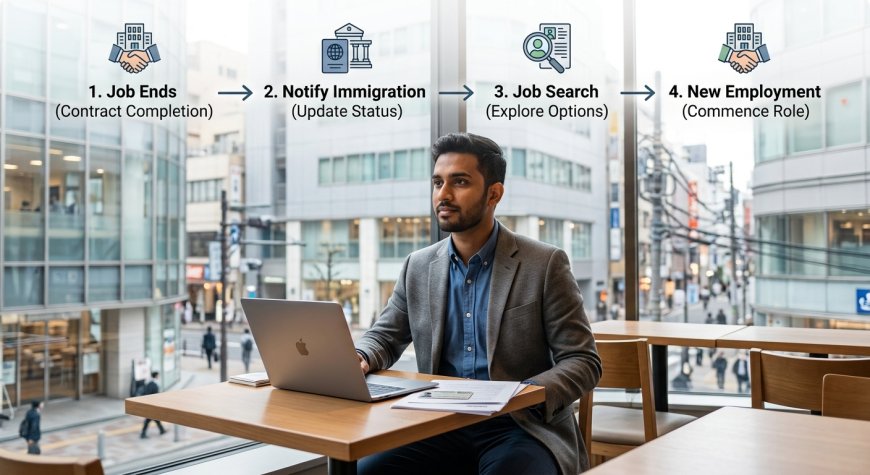
Losing Your Job Does Not Automatically Cancel Your Status of Residence
If you have a work-related Status of Residence and your employment ends, your status is not normally cancelled automatically on your last day of work.
For example, imagine you hold 技術・人文知識・国際業務 (ぎじゅつ・じんぶんちしき・こくさいぎょうむ / Engineer/Specialist in Humanities/International Services) and your employment contract ends on September 30. Your Status of Residence does not simply disappear at midnight, and your Residence Card does not instantly become invalid merely because you resigned or were dismissed.
However, your employment was part of the activity connected to your residence in Japan. Once that activity stops, you need to deal with your immigration situation properly.
You May Need to Notify Immigration Within 14 Days
This is one of the most important responsibilities foreign workers sometimes overlook.
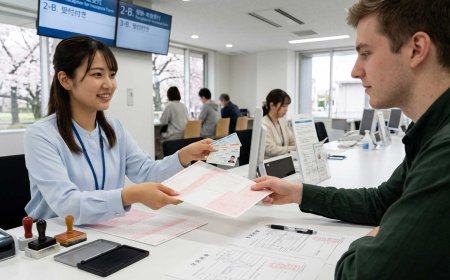
For a number of employment-related Statuses of Residence, ending your employment contract must be reported to the Immigration Services Agency. This applies to various categories, including Engineer/Specialist in Humanities/International Services and other statuses covered by the applicable notification rules.
If your contract with your employer ends because you resign, are dismissed, or otherwise leave the company, you generally need to submit the applicable notification within 14 days of the event.
Your employer may also have its own reporting responsibilities. The Ministry of Health, Labour and Welfare requires employers, with certain exceptions, to report the hiring and separation of foreign workers. However, your employer's responsibility does not necessarily replace your own immigration notification obligation.
In simple terms: your company may have paperwork to do, and you may also have paperwork to do.
The Immigration Services Agency provides methods for submitting applicable notifications, including an online notification system. Keep a copy, screenshot, confirmation email, or other record showing that you completed the procedure.
What Is the “Three-Month Rule”?
This is probably the most misunderstood part of losing a job in Japan.
Foreign workers are sometimes told:
“You have three months to find another job or Immigration will automatically cancel your visa.”
That is not an accurate explanation of the rule.
For certain activity-based Statuses of Residence, continuously failing to engage in the activities associated with that status for three months or more without a justifiable reason can become grounds for revocation.
The key phrase is “without a justifiable reason.”
Your Status of Residence does not automatically disappear on the 91st day after losing your job. Revocation is not simply an automatic countdown triggered by your last day of employment.
Individual circumstances matter.
Actively Looking for Work Can Matter
Suppose you leave an IT company and immediately begin looking for another qualifying IT position. You register with recruiters, submit applications, attend interviews, visit Hello Work, and actively try to find suitable employment.
That situation is very different from someone who stops working and makes no effort to resume the activities associated with their Status of Residence.
The Immigration Services Agency has explained that where a person has a justifiable reason for not engaging in the relevant activity, the fact that three months or more have passed does not by itself mean the status is revoked on that ground.
This is why actively searching for appropriate employment and keeping reasonable records of your job search can be important.
However, this does not mean you can remain unemployed indefinitely without considering your immigration position. If your unemployment continues for a significant period—particularly if your Period of Stay is approaching expiration—contact Immigration or obtain qualified professional advice.

Keep Evidence of Your Job Search
If you lose your job, keep reasonable records showing that you are genuinely looking for employment. These might include job applications, emails with recruiters, interview invitations, Hello Work registration, job counseling records, rejection emails, communications with prospective employers, and copies of résumés you have submitted.
You do not need to create unnecessary paperwork. The purpose is simply to be able to show what you were doing during your period of unemployment if your circumstances later need to be explained.
Register With Hello Work
One of the first places to consider visiting after losing your job is ハローワーク (Hello Work), Japan's public employment service.
Hello Work can provide job-search assistance and introduce job opportunities. Some offices and specialized foreign employment service centers also provide assistance for foreign job seekers.
If you were covered by 雇用保険 (こようほけん / Employment Insurance) and satisfy the eligibility requirements, you may also be entitled to unemployment benefits.
Foreign nationality by itself does not automatically disqualify you from Employment Insurance. Eligibility depends on your insurance coverage, employment history, reason for leaving, availability for work, and other applicable requirements.
However, remember one important distinction:
Receiving unemployment benefits does not extend or change your Status of Residence.
Employment Insurance and immigration are separate systems. You still need to comply with the rules associated with your Status of Residence.

What If You Quit Voluntarily?
Resigning voluntarily does not automatically cancel your Status of Residence.
People leave jobs for many reasons: better career opportunities, poor working conditions, relocation, family circumstances, workplace problems, salary concerns, or simply because they want a different career.
The circumstances surrounding your unemployment may be relevant if Immigration later examines why you were not engaging in your authorized activity. However, simply choosing to resign does not mean your Status of Residence automatically disappears.
You should still complete any required notifications and actively deal with your next employment or immigration step.
What If You Are Fired or Laid Off?
The same basic principle applies if your employer dismisses you.
A company may close, restructure, reduce staff, or terminate an employee's contract. Being dismissed does not normally cause your Status of Residence to disappear instantly.
Keep documents explaining what happened, such as your termination notice, separation documents, Employment Insurance paperwork, company closure notices, correspondence with your employer, and Hello Work records.
These documents can be particularly useful when the unemployment occurred because of circumstances outside your control.
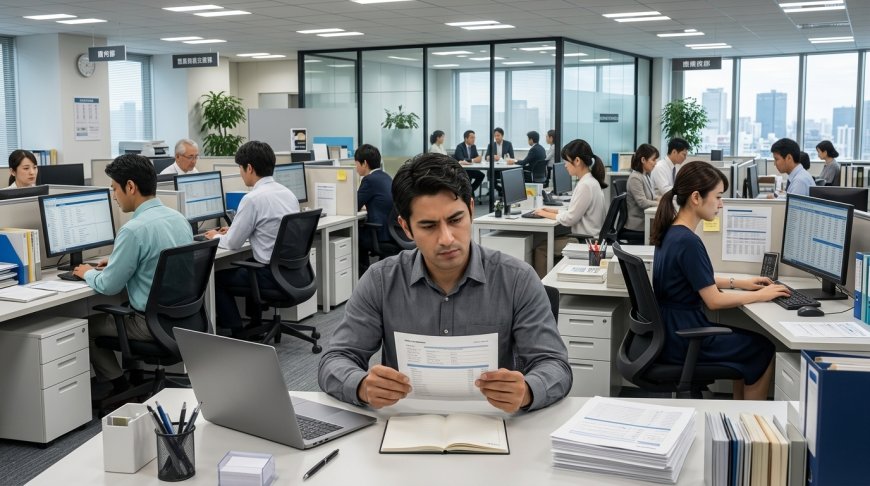
Check Your Residence Card and Period of Stay
If you lose your job, check your Residence Card immediately.
You need to separate two questions:
- How long is my current Period of Stay?
- Am I still engaging in the activities associated with my Status of Residence?
These questions are related, but they are not the same.
You might have a Residence Card showing a Period of Stay that continues for many months or even years after losing your job. That does not necessarily mean you can simply do nothing until it expires.
At the same time, becoming unemployed does not automatically change the printed expiration date to three months.
This is why the common explanation that “you have three months and then you must leave” is too simplistic.
Can You Find Another Job Under the Same Status of Residence?
In many cases, yes.
Suppose you work as a software engineer under Engineer/Specialist in Humanities/International Services and lose your job. You later find another company offering qualifying software engineering work that remains within the activities permitted by your current Status of Residence.
You may be able to continue under the same status rather than applying for a completely different one.
However, applicable Immigration notification requirements still need to be completed when entering into a new qualifying contract.
If you are uncertain whether the duties of the new position fit your current status, check before beginning the job.
Your New Job Must Fit Your Status of Residence
Losing your job does not turn your current Status of Residence into an unrestricted work permit.
If your previous job was software development under Engineer/Specialist in Humanities/International Services, you cannot automatically accept any available job simply because you need money.
If the new work falls outside the activities permitted under your current status, you may need another immigration permission or a 在留資格変更許可 (ざいりゅうしかくへんこうきょか / Permission for Change of Status of Residence).
The fact that a company is willing to hire you does not necessarily mean the work is compatible with your Status of Residence.
What If You Want to Change Careers?
Losing a job sometimes causes people to reconsider their careers completely. Perhaps you want to leave IT and start your own business, move into a field covered by Specified Skilled Worker, or your family circumstances now make another Status of Residence possible.
If your new activity belongs under another Status of Residence, you may need to apply for a Change of Status of Residence before beginning activities that your current status does not authorize.
This is different from simply changing employers while continuing the same type of qualifying work.

Can You Work Part-Time While Looking for Another Job?
It depends on your Status of Residence and the work you intend to perform.
Being unemployed does not automatically give you permission to take any part-time job available.
If the work falls outside the activities permitted by your current status, you may need 資格外活動許可 (しかくがいかつどうきょか / Permission to Engage in Activity Other Than That Permitted under the Status of Residence Previously Granted).
The same caution applies to freelance and gig work. Whether freelance activities are permitted depends on your Status of Residence, the nature of the work, your contracts, and other circumstances.
Do not assume that financial difficulty automatically gives you permission to perform otherwise unauthorized work.
What Happens at Your Next Extension?
A period of unemployment can become relevant when you later apply for an Extension of Period of Stay.
Immigration may consider your circumstances, including your current employment and whether you have complied with applicable immigration requirements.
This is another reason to keep records showing that you notified Immigration when required, actively searched for appropriate employment, and eventually returned to qualifying work.
Your income, taxes, social insurance and other circumstances can also be relevant depending on the application.
Don't Forget Health Insurance, Pension and Resident Tax
Losing your job affects more than your Status of Residence.
If you were enrolled in employees' health insurance and pension through your employer, you may need to complete procedures relating to health insurance and pension after leaving the company.
Resident tax obligations may also continue even when your salary stops because resident tax is generally based on income from the previous year.
Do not assume that losing your job automatically stops government bills.
If you are unsure what to do, contact your municipal office, pension office, former employer, or other appropriate agency.
What If Your Company Goes Bankrupt?
If your employer suddenly closes or goes bankrupt, keep all available documentation and take action promptly.
Notify the appropriate authorities when required, register with Hello Work, begin looking for another suitable job, and keep records relating to the company's closure.
Do not assume that Immigration automatically knows why you suddenly stopped working.
Does Losing Your Job Affect Permanent Residence?
It potentially can, particularly if unemployment affects matters relevant to a Permanent Residence application such as livelihood, taxes, social insurance, or your overall circumstances.
However, losing one job does not automatically mean you can never obtain Permanent Residence.
If you are preparing a Permanent Residence application and have recently become unemployed, it may be wise to review the timing and obtain advice about your particular situation.

What About Specified Skilled Workers and Highly Skilled Professionals?
People holding 特定技能 (とくていぎのう / Specified Skilled Worker) or 高度専門職 (こうどせんもんしょく / Highly Skilled Professional) should check the rules that specifically apply to their category.
These statuses have their own structures and requirements, and the employer or accepting organization can play an important role.
Do not assume that every rule applying to Engineer/Specialist in Humanities/International Services works exactly the same way for these statuses.
What About Permanent Residents and Spouses?
The situation is different for people whose Status of Residence does not restrict employment to a particular professional activity.
Statuses such as Permanent Resident (永住者), Spouse or Child of Japanese National (日本人の配偶者等), Spouse or Child of Permanent Resident (永住者の配偶者等), and Long-Term Resident (定住者) generally do not impose the same type of occupational restrictions as activity-based work statuses.
Losing employment therefore does not create the same immigration issue as it can for someone residing specifically under an employment-related status.
Unemployment can still affect income, taxes, insurance and daily life, but the immigration consequences are different.
Can Immigration Really Revoke Your Status of Residence?
Yes. Revocation of Status of Residence is a real legal procedure.
However, it should not be described as an automatic cancellation that happens exactly three months after someone becomes unemployed.
The Immigration Services Agency's process can involve investigation of the circumstances and an opportunity for the person to give their opinion before a revocation decision in applicable cases.
This is another reason the statement “Your visa automatically disappears after three months” is inaccurate.
At the same time, foreign residents should not become complacent. If you stop engaging in the activities associated with your Status of Residence, take the situation seriously and deal with it promptly.
What Should You Do Immediately After Losing Your Job?
Here is a practical checklist:
- Keep your employment documents. Save your resignation or termination notice and documents explaining why your employment ended.
- Check your Status of Residence and Period of Stay. Look at your Residence Card and know exactly what status you hold and when your current permission expires.
- Notify Immigration if required. For applicable employment-related statuses, the notification generally needs to be made within 14 days after the contract ends.
- Register with Hello Work. Ask about job-search assistance and whether you qualify for Employment Insurance benefits.
- Start looking for qualifying employment. Focus on work that fits the activities permitted by your current Status of Residence.
- Keep records of your job search. Save applications, recruiter emails, interviews and Hello Work documentation.
- Deal with health insurance, pension and taxes. Your arrangements and responsibilities may change after leaving your employer.
- Contact Immigration if your situation becomes unclear. Do not wait until your Period of Stay is almost over before seeking clarification.
Where Should You Ask for Help?
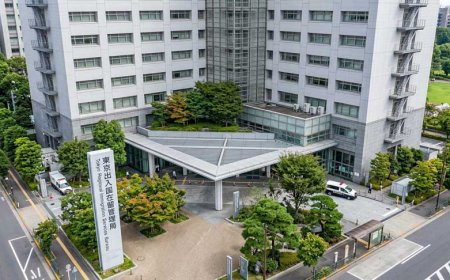
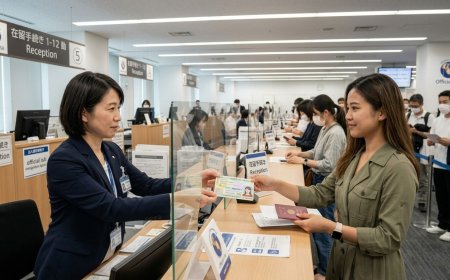
For immigration questions, contact the Immigration Services Agency of Japan (出入国在留管理庁) or your Regional Immigration Services Office.
For employment, job searching and unemployment benefits, contact Hello Work.
For health insurance, pension and resident tax, contact your municipal office, pension office or other responsible agency.
For complicated immigration cases, consider consulting a qualified 行政書士 (ぎょうせいしょし / administrative scrivener) specializing in immigration procedures or an appropriate lawyer when legal advice is required.
Be careful about relying entirely on Facebook groups, Reddit posts, YouTube videos or advice from coworkers. Other foreign residents can share useful experiences, but their Status of Residence, employment history and personal circumstances may be very different from yours.
Finding Your Next Step: Protecting Your Career and Visa Stability
Losing your job in Japan is stressful, but it does not normally mean that you have to leave Japan immediately.
If you hold an employment-related Status of Residence, understand what your particular status requires. Notify Immigration when necessary, actively look for another appropriate job, keep records of your job search, and make sure your next employment fits the activities permitted under your Status of Residence.
Most importantly, understand the famous “three-month rule” correctly. Three months without performing the activity associated with certain Statuses of Residence can become legally important, but there is no universal rule under which every foreign worker's status automatically disappears three months after losing a job.
Individual circumstances matter, including whether there is a justifiable reason for not engaging in the authorized activity.
Losing one job does not necessarily mean the end of your career or life in Japan. It may simply mean that your next priority is finding employment that fits both your career goals and your Status of Residence.
Important Disclaimer: This article provides general information about unemployment and Status of Residence in Japan and is not legal or immigration advice. Requirements and consequences depend on the Status of Residence involved, individual circumstances, reason employment ended, activities during unemployment, and other factors. Immigration laws and procedures can change, so always confirm your particular situation with the Immigration Services Agency of Japan or a qualified professional.
For more practical Japan living guides, explore related resources like the Living in Japan, Japan Starter Toolkit, and Everyday Japanese for Beginners.
Prepare Smarter, Live Better in Japan (FREE Download)
Download the First 7 Days in Japan Checklist (FREE)
Don’t guess what to do — follow a proven plan.
Download your FREE “First 7 Days in Japan Checklist” PDF now:
✔ Instant download
✔ Mobile-friendly
✔ Printable
Want the COMPLETE Version? (Premium Upgrade)
If you want a deeper, more powerful guide, there’s also a premium version available on Gumroad.
Nipino.com is committed to providing you with accurate and genuine content. Let us know your opinion by clicking HERE.