


























































Is Japan Still Worth Working In? What Foreign Workers Should Know
Japan continues to depend on foreign workers as its labor market faces demographic and staffing challenges, but having a job does not always mean having a satisfying long-term career. For some foreign workers, questions about salary, Japanese language ability, career growth, workplace culture, living costs, and long-term stability are becoming increasingly important when deciding whether to stay in Japan.

Is Japan Still Worth Working In?
For many foreigners, coming to Japan starts with a simple goal:
Find a job, earn money, support your family, and build a better life.
For some people, that plan works.
They find stable employment, improve their Japanese, move into better positions, build friendships, establish families, and eventually decide that Japan is home.
For others, the experience becomes more complicated.
The job is stable, but the salary does not seem to grow.
The work is secure, but promotion opportunities are limited.
Japanese improves, but communication at work remains difficult.
The cost of living increases while take-home pay does not seem to keep pace.
And after several years, some foreign workers begin asking a difficult question:
"Should I continue building my future in Japan?"
This does not mean Japan is becoming a bad place to work.
In fact, Japan continues to have significant demand for workers. The number of foreign workers reached a record level of more than 2.57 million as of October 2025, according to figures reported from Japan's Ministry of Health, Labour and Welfare.
At the same time, labor shortages remain an important issue in several industries.
The more interesting question, therefore, is not simply whether foreigners can find jobs in Japan.
It is:
Can foreign workers build the kind of long-term life and career they want here?
Japan Still Needs Foreign Workers
Japan's aging population and labor shortages continue to influence the country's employment landscape.
Foreign workers are now present across a wide range of industries, including:
- Manufacturing
- Construction
- Caregiving
- Hospitality
- Food service
- Agriculture
- Information technology
- Education
- Logistics
- Retail
- Professional services
Recent reporting has also highlighted continued shortages in sectors such as accommodation and agriculture.
This creates opportunities for foreigners.
But there is an important distinction between having employment opportunities and having attractive long-term career opportunities.
A person may be able to find a job relatively quickly but still struggle to move to a higher salary or a better position later.
That difference is becoming increasingly important.
Is Japan Becoming Harder or Easier for Foreign Workers? What Is Changing in 2026
The First Question: How Much Can You Actually Earn?
Salary is one of the biggest reasons people reconsider their future in another country.
Japan has many different salary levels depending on location, industry, experience, Japanese ability, qualifications, and company.
A common mistake is to look at Japan's overall average salary and assume that every worker can expect something similar.
That is not how the labor market works.
If you're trying to understand your own financial situation, start with your actual take-home pay rather than a national average.
Our guide to real salary in Japan for foreign workers explains why headline salary figures can be misleading and provides practical salary ranges for different types of workers.
For many foreigners, the more useful question is not:
"Is my salary high?"
It is:
"Is my salary increasing as my skills and experience increase?"
If you have worked in Japan for five years but your income is almost the same as when you started, it may be time to examine your career strategy.
Japan Can Be Affordable — Depending on Where You Live
Tokyo and other major cities can be expensive, particularly when rent is high.
But Japan is not one single cost-of-living market.
Housing, transportation, food, utilities, and entertainment costs can vary considerably depending on where you live.
Someone living in central Tokyo may have a very different financial experience from someone living in a regional city.
This is why foreigners should calculate their salary-to-cost-of-living ratio, rather than judging Japan based only on salary.
A monthly salary that looks modest in Tokyo may provide a different lifestyle in a regional city.
Before deciding whether you can afford to stay in Japan, compare your actual income with your actual expenses.
Our guide to working and living in Japan provides a practical breakdown of salary, housing, food, transportation, and monthly living expenses.
The Japanese Language Can Change Your Career
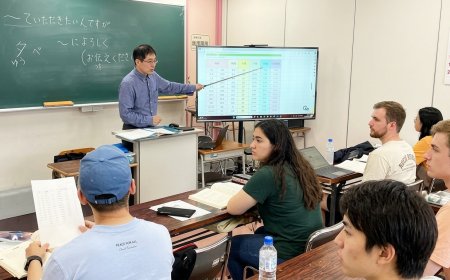
One of the biggest differences between surviving in Japan and building a career in Japan is often language ability.
You may be able to work with basic Japanese.
You may be able to follow instructions.
You may be able to communicate with coworkers.
But career growth can require something more.
Higher-level positions often involve:
- Meetings
- Presentations
- Negotiations
- Written communication
- Customer interaction
- Reports
- Problem solving
- Team leadership
- Communication with management
This is why Japanese ability can become increasingly important as your career progresses.
Our guide on how much Japanese you need to build a career in Japan explains the difference between Japanese needed for daily survival and Japanese needed for professional growth.
You do not necessarily need perfect Japanese.
But improving your ability to communicate can expand the number of jobs you can realistically consider.
Your First Job Does Not Have to Be Your Final Career
Some foreigners arrive in Japan with a specific job in mind.
Others simply want to enter the country first and figure out their career later.
Both approaches can work.
The danger is staying in the same position for years without developing transferable skills.
For example, you might start in a factory, restaurant, hotel, convenience store, language school, or other entry-level position.
There is nothing wrong with starting there.
The important question is:
What are you learning that can help you move forward?
Consider developing skills such as:
- Japanese
- IT
- Programming
- Management
- Customer service
- Sales
- Accounting
- Design
- Digital marketing
- Technical certifications
- Industry-specific qualifications
The goal is not necessarily to leave your current job immediately.
The goal is to make sure your future options become larger rather than smaller.
Why Some Foreign Workers Feel Stuck
Career stagnation can happen for many reasons.
Sometimes the problem is the company.
Sometimes it is the industry.
Sometimes the worker's Japanese ability limits the positions available.
Sometimes the person has not developed skills that employers are willing to pay more for.
And sometimes the worker simply does not know how Japanese career progression works.
There are also workplace expectations that may not be obvious to someone who grew up outside Japan.
Understanding Japanese workplace rules foreign workers often learn too late can help newcomers avoid problems involving communication, punctuality, reporting, workplace relationships, and expectations.
These details may seem small.
Over several years, however, they can influence how coworkers and managers see your reliability and professionalism.
Hard Work Is Important — But It Is Not the Whole Career Strategy
Many foreigners arrive in Japan with an extremely strong work ethic.
They work overtime.
They arrive early.
They rarely complain.
They follow instructions.
They try to be dependable.
These qualities can be valuable.
But hard work by itself does not automatically create career advancement.
Career growth may also require:
Skills + Japanese + Communication + Results + Visibility + Strategy
If you are doing the same work every year, ask yourself what has changed.
Have you learned something new?
Have you taken responsibility for larger tasks?
Have you earned a qualification?
Have you improved your Japanese?
Have you built professional relationships?
Have you become difficult to replace?
If the answer to all of these questions is no, working harder may not be enough.
You may need to change your approach.

Changing Jobs Can Be Difficult — But Staying Forever Is Not Always the Answer
Some foreign workers stay with the same company because changing jobs feels risky.
There may be concerns about:
- Visa status
- Japanese interviews
- Resume preparation
- Finding a company willing to hire foreigners
- Leaving coworkers
- Losing stability
- Moving to another city
- Family responsibilities
These are legitimate concerns.
However, staying in a job you no longer want simply because changing jobs feels difficult can also create problems.
Before making a move, research carefully.
Understand your visa eligibility for changing jobs, check your employment contract, compare salaries, investigate the new company, and calculate relocation costs.
If you are actively looking for work, our step-by-step guide to applying for jobs in Japan explains the process from checking eligibility to preparing applications and interviews.
Japanese Companies Are Not All the Same
It is easy to talk about "Japanese companies" as if they all operate in exactly the same way.
They do not.
There are traditional companies with highly structured hierarchies.
There are international companies where English is commonly used.
There are startups with flexible working environments.
There are small regional companies.
There are large corporations with formal promotion systems.
There are companies that have embraced remote work and international recruitment.
There are also workplaces that remain heavily dependent on traditional practices.
This means that having one bad workplace experience does not necessarily tell you what every Japanese employer will be like.
If your current workplace is not a good fit, researching other companies may reveal different possibilities.
Location Can Change Your Experience
Tokyo receives much of the attention when people talk about working in Japan.
But there are opportunities outside the capital.
Regional cities can offer:
- Lower rent
- Shorter commutes
- Less crowded living environments
- Different employment opportunities
- Closer relationships with local communities
- A different pace of life
The trade-off is that some industries and specialized positions are concentrated in larger cities.
This is why your ideal location depends on your priorities.
If maximizing salary is your priority, your options may look different from someone whose priority is affordable housing or family life.
There is no single "best" place to work in Japan.
There is only the location that fits your circumstances.

What About Supporting Family Back Home?
For many foreign workers, the decision to stay in Japan is not only personal.
It is financial.
Some workers send money to parents, spouses, children, or other relatives overseas.
When the yen's value changes, the amount received by family members in another country can change even if the worker's Japanese salary remains exactly the same.
This can make financial planning difficult.
Your calculation should therefore include:
- Take-home salary
- Rent
- Food
- Transportation
- Utilities
- Taxes
- Social insurance
- Savings
- Remittances
- Emergency expenses
A job that looks attractive based on gross salary may feel very different after these expenses are deducted.
What About Career Growth for Foreigners?
Foreign workers are increasingly visible across Japan's labor market.
But the experience is not identical for everyone.
Your opportunities can depend on:
- Japanese ability
- Industry
- Education
- Experience
- Professional qualifications
- Visa status
- Location
- Company size
- Networking
- Technical skills
- Communication ability
This is why comparing yourself with another foreign worker can sometimes be misleading.
Two people may both have lived in Japan for five years but have completely different careers.
Instead of asking:
"Why is that person earning more than me?"
Ask:
"What skills or experience does that person have that I can develop?"
That question gives you something you can actually act on.
A Simple Career Check for Foreign Workers
If you are unsure whether you should continue working in Japan, ask yourself these ten questions.
1. Is my income increasing?
If your salary has remained unchanged for years, investigate why.
2. Am I developing valuable skills?
Make sure your experience is useful beyond your current employer.
3. Is my Japanese improving?
Better communication can expand your career options.
4. Do I have a realistic path to promotion?
Understand what your company expects before assuming promotion will happen automatically.
5. Do I enjoy my actual lifestyle?
A salary is only one part of quality of life.
6. Can I save money?
Look at your actual monthly savings rather than your gross income.
7. Am I building professional connections?
Networking can become increasingly important as your career develops.
8. Could I find another job if necessary?
Keep your resume and skills updated even when you are comfortable.
9. Is my current visa situation compatible with my career plans?
Understand the conditions attached to your status of residence.
10. Where do I want to be in five years?
This may be the most important question.
If you cannot imagine a path from your current job to your desired future, something may need to change.
Should You Leave Japan?
There is no universal answer.
Some people will build a better career by staying.
Others may eventually decide to return home.
Some may move to another country.
Others may change industries while remaining in Japan.
And some may discover that Japan becomes more attractive as their Japanese ability, income, skills, and professional network improve.
The important thing is to make the decision based on your own circumstances rather than someone else's experience on social media.
Before making a major decision, compare the alternatives carefully.
What would your income be?
What would your housing cost?
What would happen to your family?
What career opportunities would you have?
What would happen to your visa or residency?
How much would relocation cost?
And perhaps most importantly:
Which option gives you the kind of life you actually want?
Japan's Future Still Includes Foreign Workers
The discussion about foreign workers in Japan should not be reduced to whether Japan is "good" or "bad" for foreigners.
The reality is more complicated.
Japan continues to face demographic and labor-market pressures, while foreign workers are becoming an increasingly important part of the workforce. At the same time, employers, local communities, and foreign residents are adjusting to a society with a larger international population.
That creates both opportunities and challenges.
For foreign workers, this means the future may depend less on simply finding a job and more on building a sustainable career.
Learn Japanese.
Develop valuable skills.
Understand workplace culture.
Track your finances.
Build professional connections.
Keep your documents organized.
And continue evaluating your options.
Building a Life in Japan
Japan can offer foreign workers stability, professional experience, education, safety, and the opportunity to build a life in a different culture.
But living and working here is not automatically the right choice for everyone.
A job is only one part of the equation.
Your salary matters.
Your career growth matters.
Your Japanese ability matters.
Your relationships matter.
Your family situation matters.
Your cost of living matters.
And your long-term goals matter.
If you are currently working in Japan, you do not need to decide today whether you will stay for another year, another decade, or the rest of your life.
Instead, ask yourself a simpler question:
"Is the life I am building in Japan moving in the direction I want?"
If the answer is yes, continue building.
If the answer is no, identify what needs to change.
Sometimes the solution is a new job.
Sometimes it is learning Japanese.
Sometimes it is gaining a new qualification.
Sometimes it is moving to another city.
And sometimes, after careful consideration, the right decision may be to build your next chapter somewhere else.
The important thing is to make that decision based on your goals, your circumstances, and reliable information—not simply on someone else's experience.
Important Disclaimer: This article is for general informational purposes only and does not constitute financial, legal, immigration, or career advice. Employment conditions, salaries, visa requirements, and regulations can change, so always verify current information with the relevant employer, government authority, or qualified professional before making important decisions.
For more practical Japan living guides, explore related resources like the Living in Japan, Japan Starter Toolkit, and Everyday Japanese for Beginners.
Prepare Smarter, Live Better in Japan (FREE Download)
Download the First 7 Days in Japan Checklist (FREE)
Don’t guess what to do — follow a proven plan.
Download your FREE “First 7 Days in Japan Checklist” PDF now:
✔ Instant download
✔ Mobile-friendly
✔ Printable
Want the COMPLETE Version? (Premium Upgrade)
If you want a deeper, more powerful guide, there’s also a premium version available on Gumroad.
Nipino.com is committed to providing you with accurate and genuine content. Let us know your opinion by clicking HERE.