


































































Japan Residence Fees Increase October 2026: New Visa Renewal & PR Costs
Japan will introduce significantly higher fees for residence renewals, status changes, and permanent residency applications from October 1, 2026. Here is what foreign residents need to know about the new costs, online applications, and the important September 30 deadline.
Visa Renewal in Japan on October 1, 2026
If you are a foreign resident living in Japan, renewing your visa is about to become considerably more expensive.
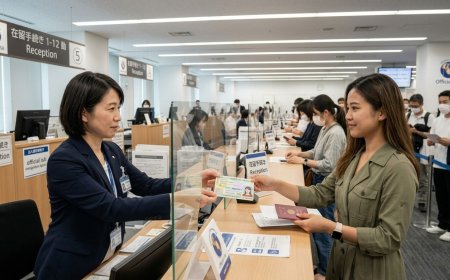
Japan's Immigration Services Agency has officially announced a new fee structure for residence-related procedures that will take effect on October 1, 2026.
For years, foreign residents have been accustomed to relatively modest fees when renewing or changing their residence status. Under the new system, however, the amount you pay will depend largely on the period of stay granted.
And for people applying for permanent residency, the difference is particularly significant.
What Is Changing on October 1, 2026?
Japan is changing the fees charged for three important immigration procedures:
- Extension of Period of Stay
- Change of Status of Residence
- Permanent Residence
Until now, changing or extending a residence status generally cost ¥6,000 when handled at an immigration office, while online procedures generally cost ¥5,500.
From October 1, the system will no longer use the same basic fee regardless of how long your new period of stay is.
Instead, the fee will vary depending on the period of residence granted by immigration.
This means someone receiving a longer period of stay could pay considerably more than someone receiving a short extension.
New Residence Renewal and Status Change Fees
For applications handled at an immigration office counter, the new fees will be:
| Period of Stay Granted | New Counter Fee |
| Up to 3 months | ¥10,000 |
| More than 3 months up to 1 year | ¥33,000 |
| More than 1 year but less than 3 years | ¥49,000 |
| 3 years to less than 5 years | ¥64,000 |
| 5 years or more | ¥75,000 |
The amount therefore depends on the period of stay that immigration actually grants.
For example, imagine that you are working in Japan and apply for an extension of your residence status.
If immigration grants you a one-year period of stay, the applicable fee would be much lower than if you were granted five years.
For many long-term foreign residents, however, the new fees represent a major increase compared with the previous flat ¥6,000 counter fee.
Permanent Residency Will Cost ¥200,000
Perhaps the biggest change concerns Permanent Residence (永住許可・えいじゅうきょか).
The fee for receiving permanent residence permission will increase from:
¥10,000 → ¥200,000
That is a twenty-fold increase.
For foreigners who have spent years building their careers, families, and lives in Japan and are considering permanent residency, ¥200,000 is a substantial amount of money.
It is therefore something prospective applicants should include in their financial planning.
Remember, however, that paying the fee does not mean that permanent residence will automatically be approved.
Applicants must still meet Japan's requirements concerning matters such as residence history, conduct, financial stability, taxes, pension contributions, social insurance, and other immigration requirements.
The fee is associated with receiving permission rather than purchasing permanent resident status.
There Is an Important September 30 Rule
One detail could be especially important for people already preparing an application.
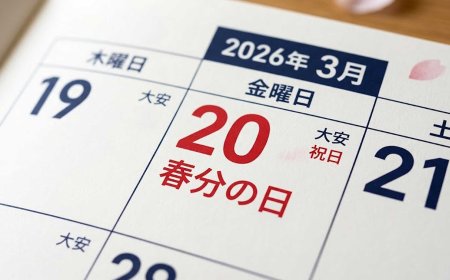
According to Japan's Immigration Services Agency, the new fees apply to applications submitted on or after October 1, 2026.
Applications submitted on or before September 30, 2026 remain subject to the previous fee structure even if immigration makes its decision after October 1.
For example:
Suppose you submit your residence renewal application on September 25, 2026.
Immigration reviews the application and grants your extension on October 20.
Because your application was submitted before October 1, the old fee rules apply.
This distinction could potentially save some applicants a significant amount of money.
However, don't rush an incomplete or inaccurate immigration application simply to beat the deadline. Your documents should still be complete and correct.
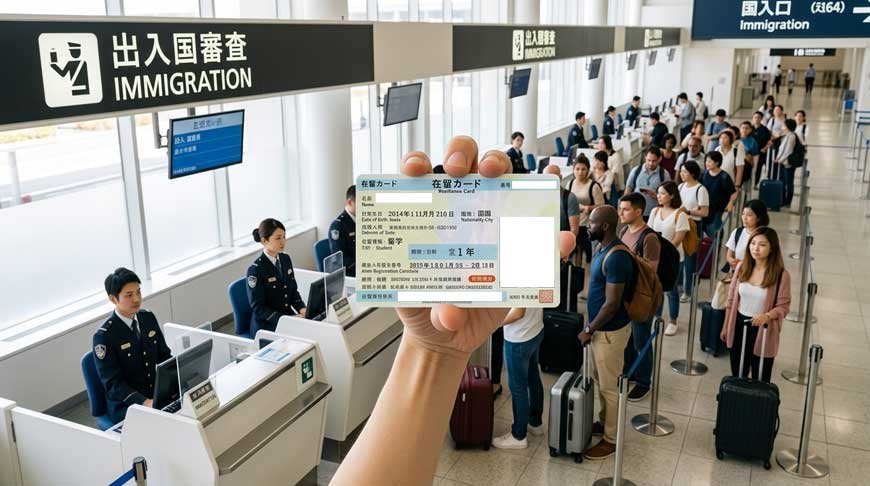
Online Applications Can Be Cheaper
Another reason foreign residents should become familiar with Japan's online immigration system is cost.
Under the new system, online applications for eligible procedures can be cheaper than applying at an immigration office counter.
For residence periods longer than three months, the online rates are generally lower than their corresponding counter rates.
For example, an in-person procedure resulting in a residence period of five years or more can cost ¥75,000, while the corresponding online fee can be ¥65,000.
That creates a potential saving of ¥10,000 simply by using the online application system where the procedure is eligible.
Not every immigration procedure can necessarily be completed entirely online, however, so applicants should check the latest instructions from the Immigration Services Agency before applying.
Online Payment Is Changing Too
The payment process for online applications will also change.
For eligible applications submitted through the Residence Application Online System from October 1, the Immigration Services Agency says payment will move away from the traditional revenue-stamp method used for these online cases.
Applicants will instead be able to use designated payment methods including convenience-store payment and bank payment.
Internet banking can also make cashless payment possible.
Foreign residents should be particularly careful about fraudulent emails.
The Immigration Services Agency has warned that official payment instructions for these online residence fees will come from its designated payment service. Do not blindly follow payment links from suspicious emails claiming to represent Japanese immigration.
When uncertain, access the Immigration Services Agency website directly rather than clicking an unexpected link.
Why Is Japan Increasing the Fees?
According to the Immigration Services Agency, the government considered several factors when revising the system.
These include the actual costs involved in immigration examinations, expenses associated with immigration and residence management, comparable fees in other countries, and the ability to respond to future increases in costs.
Japan has also been changing the way it manages its rapidly growing foreign population.
For foreign residents, however, the practical consequence is straightforward:
Immigration-related expenses should now become part of your long-term Japan budget.
A residence renewal is no longer necessarily a relatively minor ¥6,000 expense.
Depending on your circumstances and the period granted, it could cost tens of thousands of yen.
Can the New Fees Be Reduced?
Yes, but only in certain circumstances.
Japan's revised rules allow fees to be reduced or exempted for people who qualify because of financial hardship or other special circumstances defined under the regulations.
According to the Immigration Services Agency, qualifying applicants receiving an extension or change of residence status for more than three months may potentially have their fee reduced to ¥10,000.
For qualifying permanent residence cases, the amount may potentially be reduced to ¥20,000.
These reductions are not automatic.
Applicants must meet the applicable requirements, so you should not assume that financial difficulty alone automatically guarantees a reduced fee.
If you believe you may qualify, check the Immigration Services Agency's official guidelines or speak directly with immigration.
What Should Foreign Residents Do Now?
If your residence card expires soon, check the expiration date now rather than waiting until the last minute.
Foreign residents should consider four things before October.
First, determine when you are eligible to submit your renewal application.
Second, prepare your documents early. Depending on your residence status, you may need employment documents, tax certificates, proof of income, company information, or other supporting documents.
Third, investigate whether your application can be submitted through Japan's online residence application system.
Finally, budget for immigration fees just as you would budget for taxes, insurance, rent, or other unavoidable expenses.
This becomes particularly important for anyone considering permanent residency.
Should You Apply Before October 1 Just to Save Money?
For some people whose applications are already due and whose documents are ready, applying before October could make financial sense.
But immigration applications should never be rushed simply because fees are increasing.
Your eligibility, documentation, tax payments, pension contributions, employment situation, and residence history can be much more important than saving money on the application fee.
Permanent residency applicants in particular should carefully evaluate whether they actually meet the requirements before submitting an application.
Saving money on a fee is useful.
Receiving the correct residence status is much more important.
What This Means for Foreigners Planning to Live in Japan Long Term
This change may seem like another administrative expense, but it highlights something important about living abroad.
Moving to Japan isn't only about finding an apartment, getting a job, and learning Japanese.
You also need to understand the country's administrative system.
Residence status, taxes, pension, health insurance, My Number, city hall registration, and immigration procedures eventually become part of everyday life.
If you're still preparing for your move, read Nipino's Ultimate Guide to Moving to Japan (2026 Edition) for a broader overview of visas, housing, work, transportation, and settling into life in Japan.
Understanding these systems before you need them can save you money—and plenty of stress.
Residence-Related Costs in Recent Years
The October 2026 fee increase is one of the most significant changes to Japan's residence-related costs in recent years.
A procedure that previously cost around ¥6,000 at the immigration counter could soon cost tens of thousands of yen depending on the period of stay granted.
Permanent residence is the most dramatic example, with the permission fee rising from ¥10,000 to ¥200,000.
The most important date to remember is:
October 1, 2026.
Applications submitted from that date will fall under the new fee structure.
Applications submitted by September 30 remain under the previous fee rules, even when permission is granted later.
If your renewal period is approaching, now is a good time to check your residence card, organize your documents, understand your options, and prepare financially.
Living successfully in Japan isn't just about adapting to the culture.
Sometimes, it also means staying one step ahead of the paperwork.
Resources: The factual portions are based primarily on the Immigration Services Agency's official August 2026 announcement and Q&A. The agency confirms the October 1 application-date rule, tiered fees, possible reductions, and new online payment arrangements.
Official Immigration Services Agency fee announcement.
For more practical Japan living guides, explore related resources like the Living in Japan, Japan Starter Toolkit, and Everyday Japanese for Beginners.
Prepare Smarter, Live Better in Japan (FREE Download)
Download the First 7 Days in Japan Checklist (FREE)
Don’t guess what to do — follow a proven plan.
Download your FREE “First 7 Days in Japan Checklist” PDF now:
✔ Instant download
✔ Mobile-friendly
✔ Printable
Want the COMPLETE Version? (Premium Upgrade)
If you want a deeper, more powerful guide, there’s also a premium version available on Gumroad.
Nipino.com is committed to providing you with accurate and genuine content. Let us know your opinion by clicking HERE.