

























































Is Japan Becoming Harder or Easier for Foreign Workers? What Is Changing in 2026
Japan now has more than 2.5 million foreign workers, and the number continues to grow. But at the same time, immigration enforcement is getting stricter, residence procedures are changing, and Japan is introducing new systems for foreign workers. So is Japan becoming easier or harder for foreigners who want to work here? The answer may be both. Here is what foreign workers should understand about Japan's changing employment landscape in 2026.

Japan needs more foreign workers than ever, yet immigration rules, residence procedures, and expectations for foreigners are also changing. So is Japan actually becoming easier or harder for foreigners who want to work and build a future here?
At first glance, Japan seems to be opening its doors to foreign workers.
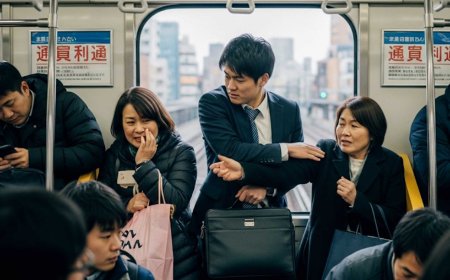
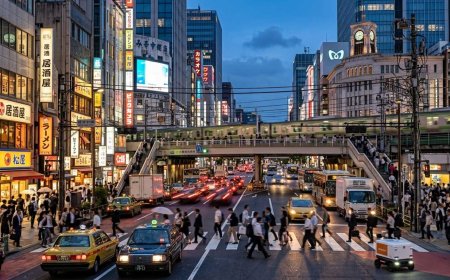
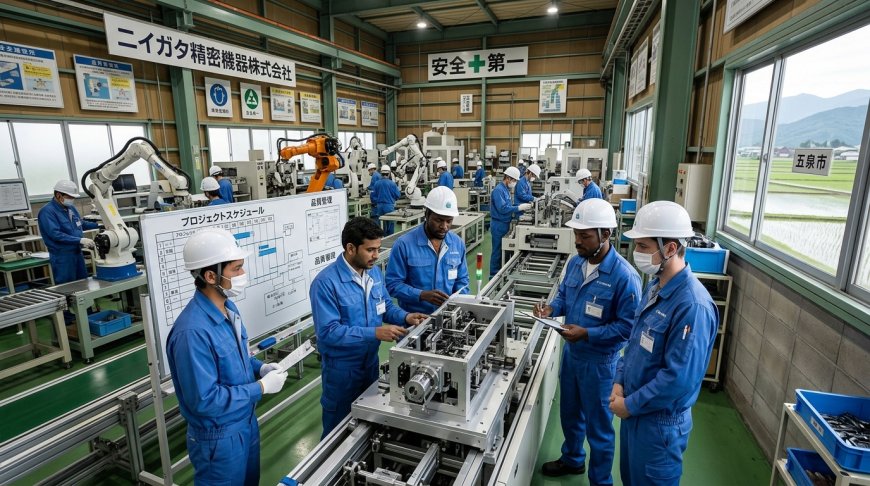
Walk through factories, hotels, restaurants, convenience stores, construction sites, care facilities, and logistics centers in many parts of the country and international workers are increasingly visible.
Japan's aging population and shrinking workforce have made foreign workers an important part of the country's economy.
But something else is happening at the same time.
Japan is strengthening immigration enforcement.
Residence procedures are changing.
Visa and permanent residency fees are increasing.
The government is discussing Japanese-language and social-learning programs for foreign residents.
The Technical Intern Training system is being replaced by a new employment system.
The government is also paying increasing attention not simply to how foreigners enter Japan, but to how they work, pay taxes, follow immigration rules, and integrate into Japanese society.
This creates an important question for anyone considering a future in Japan:
Is Japan becoming easier or harder for foreign workers?
The answer is both.
Japan is creating more pathways for foreign workers because it needs them.
At the same time, the country appears to be moving toward a system where foreigners who want to stay long term will be expected to demonstrate greater stability, compliance, skills, and integration.
Understanding that difference may be extremely important for anyone planning a career in Japan.
Japan Now Has More Than 2.5 Million Foreign Workers
Foreign workers are no longer a small part of Japan's labor market.
According to Japan's Ministry of Health, Labour and Welfare, the number of foreign workers reached approximately 2.57 million as of October 2025.
That was another record.
The number increased by more than 268,000 from the previous year.
There were also more than 371,000 workplaces employing foreign workers.
Those numbers tell an important story.
Japan is becoming increasingly dependent on international labor.
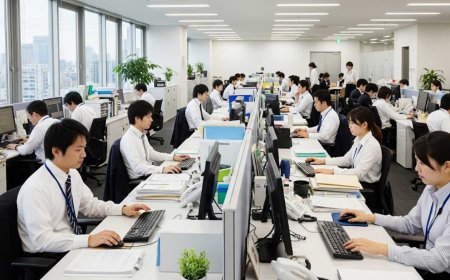
Foreign workers can now be found throughout the Japanese economy.
Some work in highly skilled professions such as information technology, engineering, education, finance, research, and international business.
Others work in industries facing serious labor shortages, including manufacturing, construction, agriculture, food services, accommodation, transportation, building cleaning, and nursing care.
The foreign workforce is also becoming more diverse.
Vietnamese workers represented the largest nationality group in the government's latest employment statistics, followed by Chinese workers.
Filipinos were third.
There were approximately 260,869 Filipino workers in Japan, accounting for around one in ten foreign workers.
For Filipinos considering employment in Japan, that is significant.
Japan is already one of the major destinations for Filipino workers, and their role in the Japanese economy could continue growing.
Japan Status of Residence Explained: Guide for Foreigners

So Why Does Japan Need Foreign Workers?
The simplest explanation is demographics.
Japan is getting older.
At the same time, fewer children are being born.
That means the number of working-age people available to support the economy is under long-term pressure.
The effects are already visible.
Companies in some industries struggle to recruit enough workers.
Restaurants shorten operating hours.
Transportation companies struggle to find drivers.
Construction companies face aging workforces.
Care facilities need additional employees.
Hotels and tourism businesses need workers as international tourism grows.
Factories struggle to replace retiring employees.
Smaller companies in rural areas can face even greater difficulties recruiting young Japanese workers.
Foreign workers therefore provide something Japan increasingly needs: people.
But Japan's approach is not simply to open the border and allow unlimited immigration.
Instead, the country has been creating specific employment pathways targeted toward industries where workers are needed.
One of the most important examples is the Specified Skilled Worker system.
The Specified Skilled Worker System Is Becoming More Important
The Specified Skilled Worker residence status is called 特定技能(とくていぎのう), or Tokutei Ginou.
It was introduced to help Japan recruit workers in industries experiencing serious labor shortages.
There are two major categories:
Specified Skilled Worker (i), or 特定技能1号
Specified Skilled Worker (ii), or 特定技能2号
Specified Skilled Worker (i) generally provides a pathway for foreign workers who possess the necessary skills and Japanese ability to work in designated industries.
Specified Skilled Worker (ii) is designed for workers with more advanced skills and can provide a stronger foundation for long-term residence.
Japan continues updating the system as its labor needs evolve.
For foreign workers, this is important because Japan's labor shortage is increasingly creating structured immigration pathways that did not exist in the same form years ago.
Another Major Change Is Coming: 育成就労
One of the biggest changes foreigners should understand is 育成就労(いくせいしゅうろう), or Ikusei Shuro.
This can be translated roughly as Employment for Skill Development.
The new system is scheduled to replace Japan's Technical Intern Training Program.
The old Technical Intern Training system was officially designed around skills transfer and international cooperation.
In reality, however, it became closely connected to Japan's demand for workers.
It was also heavily criticized over the years because of problems involving working conditions, worker mobility, and cases of abuse.
The new system represents an important shift.
Instead of maintaining the idea that workers are primarily coming to Japan as trainees, the new framework is more directly connected with developing workers who can eventually transition toward the Specified Skilled Worker system.
For foreigners interested in working in industries facing labor shortages, this could create a clearer employment pathway.
The New System Starts in 2027
The Employment for Skill Development system is scheduled to take effect on April 1, 2027.
That means 2026 is an important preparation year.
Government agencies, employers, supervising organizations, and support organizations are already preparing for the transition.
For prospective workers overseas, this is also something worth watching carefully.
The system could significantly affect how future workers are recruited, trained, and employed in Japan.
If someone is currently considering entering Japan through the Technical Intern Training system, they should understand that the system is approaching a major transition.

Does This Mean Japan Is Becoming Easier for Foreign Workers?
In terms of employment opportunities, in many industries the answer is yes.
Japan's labor shortage creates opportunities that simply did not exist at the same scale several decades ago.
Employers that once rarely considered hiring foreigners are increasingly doing so.
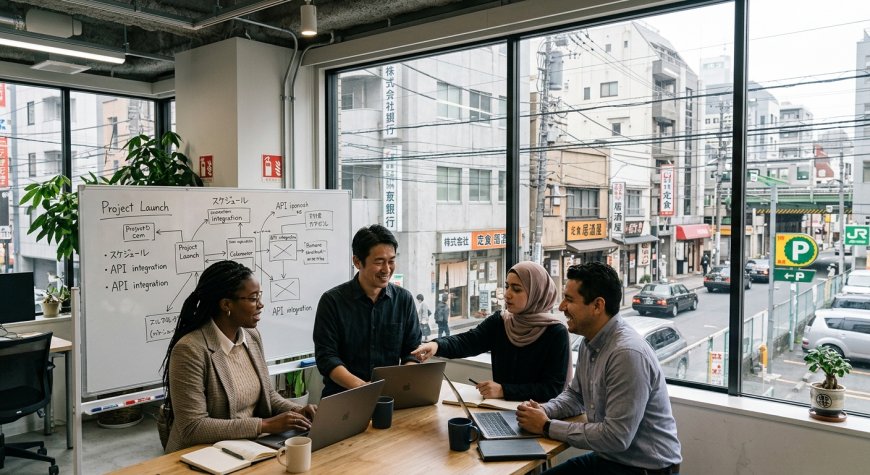
Companies are also becoming more familiar with work visas, international recruitment, Specified Skilled Workers, foreign graduates, international students, and multilingual workplaces.
This is particularly noticeable outside traditional international industries.
A foreign worker no longer necessarily needs to work for a multinational company in Tokyo.
Opportunities can exist in regional Japan as well.
For foreigners willing to develop Japanese ability and specialized skills, this could be an excellent time to build a career in Japan.
But there is another side to the story.
Japan Is Also Becoming Stricter About Immigration Compliance
While Japan is creating more pathways for workers, the government is also strengthening immigration management.
This distinction is extremely important.
Japan can simultaneously welcome legal foreign workers while becoming stricter toward immigration violations.
Those two policies are not contradictory.
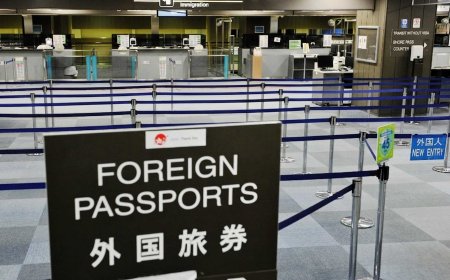
Japan's government has been strengthening measures against illegal overstaying and unauthorized employment.
For ordinary foreign residents following the rules, this should not be interpreted as Japan suddenly becoming hostile toward foreigners.
But it does mean that immigration compliance is increasingly important.
Foreign residents should take their responsibilities seriously.
That includes understanding your residence status, what work your status allows, your period of stay, residence renewal deadlines, permission for activities outside your status, required immigration notifications, tax obligations, and social insurance obligations.
A casual attitude toward these matters can create serious problems.
Your Residence Status Is Not Just a Visa Sticker
Foreigners sometimes think about their visa only when it is about to expire.
That is a mistake.
Your residence status determines what activities you are legally permitted to perform in Japan.
For example, someone with an Engineer, Specialist in Humanities, or International Services status cannot automatically perform any job they want simply because a company is willing to hire them.
Likewise, international students have restrictions on employment and generally require permission before engaging in part-time work.
Specified Skilled Workers also operate under rules connected to their particular residence status and employment.
Before changing jobs, accepting freelance work, or starting additional employment, foreigners should understand whether those activities are permitted.
When uncertain, check with the Immigration Services Agency or obtain qualified professional advice.
Residence Procedures Are Also Becoming More Expensive
Another noticeable change in 2026 involves immigration fees.
Japan has approved substantial changes to fees associated with residence procedures.
For foreign residents, this means immigration planning is becoming a financial issue as well.
Renewing residence status, changing residence status, or applying for permanent residency can involve considerably higher fees than foreigners were accustomed to paying in previous years.
That makes another point increasingly important:
Do not leave immigration planning until the last minute.
Know when your residence status expires.
Understand what documents you need.
Budget for the application fee.
Keep employment, tax, and social insurance records organized.
If you eventually plan to apply for permanent residency, start thinking about your record years before the application, not several weeks before submitting it.
Taxes and Social Insurance Matter
This is one of the areas where long-term foreign residents should be particularly careful.
Working in Japan is not only about receiving a salary.
Residents may have obligations involving income tax, resident tax, health insurance, pension, and employment insurance.
The exact situation depends on employment and residence circumstances.
But ignoring official bills is never a good strategy.
Foreigners sometimes misunderstand Japanese government letters because they cannot read them.
A letter gets placed on a table.
Another arrives.
Then another.
Eventually, the person discovers that something important was unpaid.
If you receive a document from 市役所(しやくしょ), City Hall; 区役所(くやくしょ), Ward Office; 税務署(ぜいむしょ), Tax Office; or 年金事務所(ねんきんじむしょ), Pension Office, do not ignore it simply because you cannot understand it.
Translate it.
Ask someone.
Visit the office.
Find out what it means.
Living in Japan long term requires learning how these systems work.
Japanese Ability Is Becoming More Valuable
There was a time when some foreigners could build comfortable careers in Japan while speaking very little Japanese.
That is still possible in certain industries.
Highly international technology companies, universities, foreign corporations, and some specialized positions may operate largely in English.
But for the majority of foreigners, Japanese ability dramatically increases opportunities.
It helps with job searching, interviews, workplace communication, promotions, salary negotiations, changing companies, networking, understanding contracts, dealing with government offices, and everyday independence.
Japan is also considering a new learning program for foreign residents that would combine Japanese-language education with information about Japanese systems and social rules.
That tells us something about the direction Japan may be heading.
Language ability is increasingly being viewed not simply as a workplace skill, but as part of successful integration.
JLPT Is Useful, But Communication Matters More
Many foreign workers become obsessed with JLPT levels.
- N5
- N4
- N3
- N2
- N1
The JLPT can certainly help demonstrate Japanese ability.
Some companies explicitly request N2 or another level.
But passing a test and functioning professionally are not always the same thing.
A person with N2 who struggles to explain a problem during a meeting may be less useful to an employer than someone with N3 who communicates confidently and understands the workplace.
Employers ultimately need people who can do the job.
So instead of asking only, "What JLPT level do I need?"
Ask, "Can I communicate effectively in the situations my job requires?"
That is a much more useful question.

Skills Plus Japanese Is a Powerful Combination
Japanese ability alone does not automatically create a successful career.
Skills matter.
Consider two candidates.
Candidate A speaks excellent Japanese but has few specialized professional skills.
Candidate B has strong programming, engineering, design, accounting, manufacturing, or technical skills and can communicate adequately in Japanese.
Depending on the position, Candidate B may be considerably more valuable.
The strongest combination is professional skill, Japanese ability, and understanding of Japanese workplace culture.
That combination gives foreign workers options.
Instead of depending on one employer, they can compete in the broader labor market.
That matters because the best form of career security is not simply keeping your current job.
It is knowing that other companies would want to hire you.
Foreign Workers Should Stop Thinking Only About Getting Into Japan
This is an important mindset change.
For many aspiring foreign workers, the goal is:
"How can I get a job in Japan?"
But getting into Japan is only the beginning.
A better question is:
"How can I build a sustainable career in Japan?"
Those are completely different goals.
Getting into Japan might require finding one employer willing to sponsor your residence status.
Building a career requires much more.
You need skills.
Japanese ability.
Professional relationships.
A good employment history.
Financial stability.
Understanding of taxes and social insurance.
Knowledge of your industry.
And eventually, the confidence to change employers when necessary.
Your First Job in Japan Does Not Have to Be Your Last
Some foreigners become psychologically trapped by their first employer.
They believe:
"My company sponsored my visa, so I cannot leave."
That is not necessarily true.
Residence status and employment rules vary, so workers must always make sure a new job is compatible with their status.
But foreign professionals do change companies in Japan.
In fact, changing jobs can sometimes be an important part of career development.
A worker might begin with a lower salary because they lack Japanese experience.
After several years, they may have better Japanese, Japanese work experience, professional certifications, stronger technical skills, and industry connections.
Their market value may be completely different.
Foreign workers should periodically ask:
Am I still learning?
Is my salary improving?
Are my responsibilities increasing?
Am I becoming more valuable?
If the answer to all four remains no for years, it may be time to reconsider the situation.
Understand Your Employment Contract
Never sign an employment contract you do not understand.
Before accepting a job, check the basic salary, overtime rules, fixed overtime, bonuses, transportation allowance, housing deductions, working hours, holidays, paid leave, probation period, social insurance, contract duration, and renewal conditions.
Pay particular attention to 固定残業代(こていざんぎょうだい), or fixed overtime pay.
Some employment offers advertise a monthly salary that already includes payment for a certain number of overtime hours.
That can make the salary appear more attractive than it actually is.
Always understand the breakdown.
Rural Japan May Offer More Opportunities Than You Think
When foreigners imagine working in Japan, many immediately think of Tokyo.
But Japan's labor shortage can be even more serious outside the largest cities.
Regional employers often struggle to recruit younger workers.
That can create opportunities.
Living outside Tokyo may also offer advantages such as lower rent, shorter commutes, less crowded transportation, larger apartments, closer access to nature, and stronger local community connections.
The disadvantage is that Japanese ability often becomes more important.
There may be fewer English-speaking services and fewer international workplaces.
But for someone willing to learn Japanese, regional Japan can provide a very different and sometimes more affordable path to building a life in the country.
What Foreign Workers Should Do in 2026
Japan's employment and immigration environment is changing.
Foreign workers do not need to panic.
They need to prepare.
Improve your Japanese.
Even small improvements compound over time.
Do not wait until you have time.
Study consistently.
Build a real professional skill.
Choose something employers need.
Programming, engineering, accounting, caregiving, hospitality management, manufacturing skills, design, digital marketing, and data analysis are just some examples.
Become good at something.
Understand your residence status.
Know what you can and cannot legally do.
Pay taxes and social insurance properly.
Keep records and do not ignore government notices.
Keep your documents organized.
Employment contracts, tax records, pension records, and immigration documents can become important later.
Learn how Japan works.
Understand city hall, health insurance, pension, employment rules, and basic Japanese workplace expectations.
Build an emergency fund.
Changing jobs is much easier when you have savings.
Financial desperation reduces your choices.
Think long term.
Do not plan only until your next residence renewal.
Ask yourself where you want to be in Japan five years from now.

Is Japan Becoming Harder or Easier?
So let us return to the original question.
Is Japan becoming harder or easier for foreign workers?
For skilled, responsible, and adaptable foreign workers, Japan may actually be becoming easier in terms of opportunity.
The country needs workers.
More employers are hiring foreigners.
New employment pathways are being developed.
Specified Skilled Worker programs are expanding.
Regional companies are becoming more open to international employees.
But Japan may simultaneously become stricter about responsibility.
Immigration compliance matters.
Taxes matter.
Social insurance matters.
Language ability matters.
Understanding Japanese society matters.
Long-term stability matters.
That combination tells us where Japan may be heading.
Japan does not simply want more foreign workers.
Increasingly, it appears to want foreign workers who can become stable, productive members of Japanese workplaces and communities.
The Future of Foreign Employment in Japan
Foreign employment in Japan is becoming more structured.
Japan's demographic situation means foreign workers will almost certainly remain important to the country's economy.
The record number of international workers already demonstrates that reality.
At the same time, the government is redesigning employment programs, strengthening immigration management, and placing greater attention on integration.
For foreigners, this creates both opportunity and responsibility.
The people who may benefit most from these changes are not necessarily those who simply find a way to enter Japan.
They are the people who continue developing after they arrive.
They learn Japanese.
They build valuable skills.
They understand their rights and responsibilities.
They maintain clean tax, pension, and immigration records.
They learn how Japanese workplaces operate without losing their own identity.
Most importantly, they stop thinking of themselves as temporary outsiders waiting for someone to give them an opportunity.
They begin building careers.
Japan is changing.
The question for foreign workers is not simply whether Japan will continue accepting them.
The better question is:
Will you be ready for the Japan that is emerging?
Important Disclaimer: This article is for general informational purposes only and is not legal or immigration advice. Japan’s immigration and employment rules may change, so always check the latest information from official Japanese government sources or consult a qualified professional before making important decisions.
For more practical Japan living guides, explore related resources like the Living in Japan, Japan Starter Toolkit, and Everyday Japanese for Beginners.
Prepare Smarter, Live Better in Japan (FREE Download)
Download the First 7 Days in Japan Checklist (FREE)
Don’t guess what to do — follow a proven plan.
Download your FREE “First 7 Days in Japan Checklist” PDF now:
✔ Instant download
✔ Mobile-friendly
✔ Printable
Want the COMPLETE Version? (Premium Upgrade)
If you want a deeper, more powerful guide, there’s also a premium version available on Gumroad.
Nipino.com is committed to providing you with accurate and genuine content. Let us know your opinion by clicking HERE.