




































What to Do When You Get Sick in Japan: Hospitals, Clinics, Emergency
Getting sick in Japan can feel stressful for foreigners, especially when language, insurance, and hospital systems are unfamiliar. This guide explains when to visit a clinic, when to go to a hospital, when to call an ambulance, and how to get medical help safely in Japan.

Getting sick in Japan
Getting sick in Japan can feel scary, even if the illness itself is not serious. Maybe you wake up with a fever, your throat feels like sandpaper, your child is coughing at night, or your stomach pain refuses to go away. Suddenly, simple questions become stressful. Should you go to a clinic or a hospital? Do you need an appointment? Will the doctor speak English? What if you cannot explain your symptoms in Japanese? What if it is an emergency?
The good news is that Japan has a reliable healthcare system, and foreign residents can receive medical care through clinics, hospitals, pharmacies, and emergency services. The challenge is knowing which door to open first. In Japan, small clinics usually handle everyday illnesses, while large hospitals focus more on serious, specialized, or referred cases. For true emergencies, the ambulance number is 119. Japan National Tourism Organization’s medical guide clearly lists “Ambulance Call 119” and provides a searchable database of medical institutions that can assist foreign patients.
If you understand the basic flow before you get sick, everything becomes calmer. Think of this guide like a health map for Japan: not something you want to use every day, but something you will be grateful to have when your body suddenly says, “Not today.”
Want a smoother transition into life in Japan? Check out the Japan Starter Toolkit.
First Step: Decide How Serious It Is
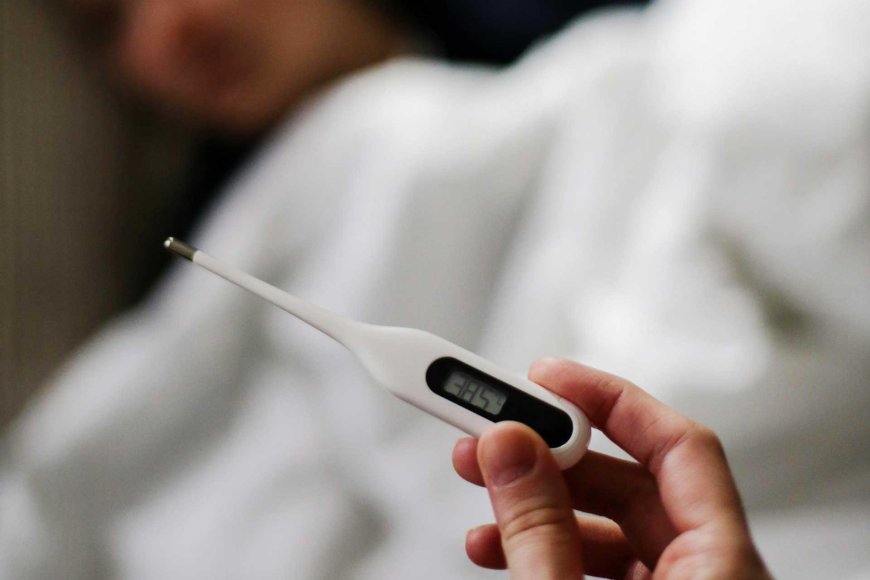
When you feel sick, the first decision is not “Which hospital is best?” It is “How serious is this?” Japan’s healthcare system works better when you choose the right level of care.
For mild symptoms, a local clinic is usually the best first stop. This includes common colds, sore throat, mild fever, stomach discomfort, skin problems, seasonal allergies, minor injuries, and routine prescriptions. Clinics are smaller, easier to access, and usually more appropriate for everyday care.
For moderate symptoms, such as high fever that does not improve, strong abdominal pain, worsening infection, dehydration, severe dizziness, or symptoms that affect daily function, you may still start with a clinic, but you might need referral to a hospital.
For emergency symptoms, do not wait. Call 119 for an ambulance if someone has severe chest pain, difficulty breathing, loss of consciousness, stroke-like symptoms, serious injury, heavy bleeding, severe burns, or any condition that feels life-threatening. Japan’s Fire and Disaster Management Agency’s English ambulance guide says that when calling 119, you should first tell the operator that it is a medical emergency and then give the location.
| Situation | Best Action |
|---|---|
| Mild fever, cold, sore throat | Visit a local clinic |
| Rash, ear pain, eye problem | Visit a specialist clinic |
| Severe symptoms but not immediately life-threatening | Call a clinic/hospital or medical consultation line |
| Life-threatening condition | Call 119 |
| Unsure whether ambulance is needed | Use local consultation services where available |
Clinics in Japan: Your First Stop for Everyday Illness
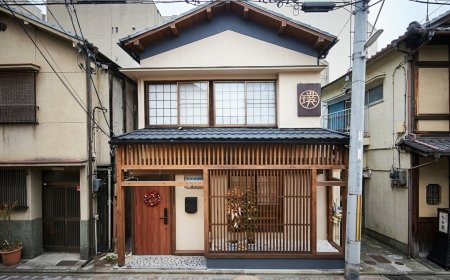
In Japan, clinics are often the most practical place to go when you are sick. A clinic may be called クリニック, 医院, or 診療所. Many are small medical offices focused on one specialty. For example, 内科 (internal medicine) clinics handle many general adult illnesses, while 小児科 (pediatrics) handles children, 耳鼻科 (ENT) handles ear, nose, and throat issues, 皮膚科 (dermatology) handles skin problems, and 歯科 (dentistry) handles dental care.
A local clinic can feel less intimidating than a large hospital. The waiting room is smaller, the process is simpler, and the cost is usually manageable if you have public health insurance. For many common illnesses, the doctor examines you, gives a prescription, and you take it to a nearby pharmacy.
When you visit, bring your health insurance card or My Number health insurance information, residence card, cash or payment card, list of medicines, and allergy information. If your Japanese is limited, prepare your symptoms in simple written form before going. You can write: “fever for three days,” “cough at night,” “stomach pain after eating,” or “allergic to penicillin.” Clear notes can make the visit much smoother.
Some clinics accept walk-ins, while others require appointments. If you have a fever or infectious symptoms, call ahead when possible. Some city medical guides advise people with fever or symptoms to call before going to the hospital or clinic, especially when infectious disease precautions are in place.
Healthcare in Japan for Foreigners: Insurance, Costs, and How It Works
Hospitals in Japan: When You Need Serious or Specialist Care
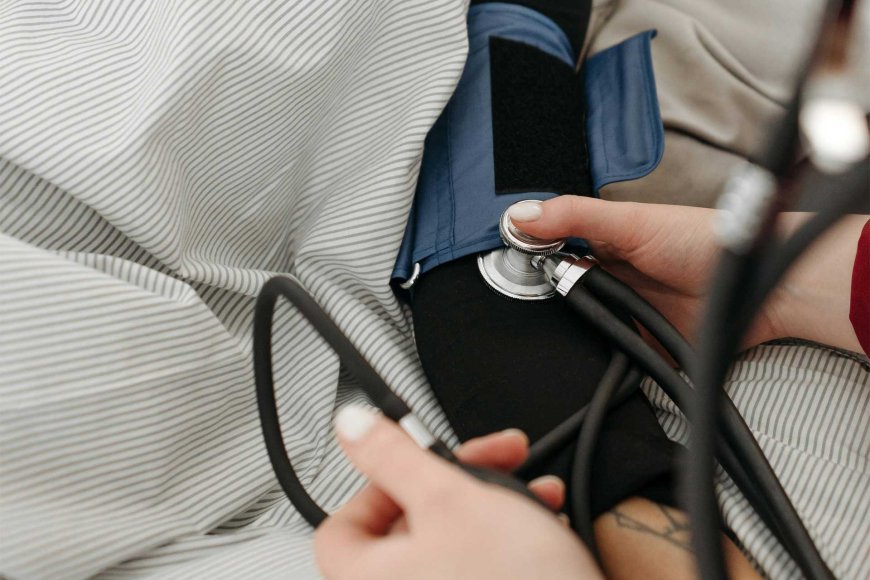
Hospitals in Japan are important, but they are not always the best first stop for minor illness. Large hospitals often focus on emergency care, specialist treatment, surgery, hospitalization, and patients referred by clinics. Some hospitals may charge extra fees if you visit without a referral letter for non-emergency care.
This can surprise foreigners who come from countries where hospitals are the default place for almost everything. In Japan, the system often works more like a ladder: clinic first, hospital if needed.
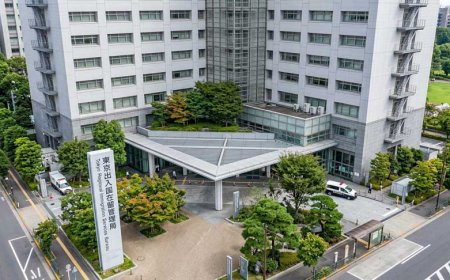
Emergency outpatient departments are also not meant for casual visits. Tokyo Metropolitan Bokutoh Hospital explains that its emergency outpatient facility handles emergency patients and is not for general outpatient treatment; it also notes that medicine prescriptions are generally only for one day.
If your condition is not life-threatening but feels too serious for a small clinic, search for a hospital that matches your symptoms and language needs. If possible, call before visiting. Bring your documents, insurance information, and someone who can help with Japanese if needed.
| Facility Type | Best For | Important Note |
| Local clinic | Common illness, minor injury, first consultation | Usually best first step |
| Specialist clinic | Skin, ENT, eye, dental, women’s health | Choose based on symptoms |
| General hospital | Serious illness, tests, referrals | May require referral |
| Emergency outpatient | Urgent cases outside normal hours | Not for ordinary checkups |
| University/large hospital | Advanced specialist care | Extra fees may apply without referral |
Emergency Care in Japan: Call 119
For medical emergencies, the number to call in Japan is 119. This is used for ambulance and fire emergencies. You can call from a mobile phone, landline, or public phone. The FDMA ambulance guide says callers should stay calm, answer slowly, tell the dispatcher it is a medical emergency, and clearly give the location.
A simple emergency script can help:
| English | Simple Japanese |
| Medical emergency. | 救急です。(Kyuukyuu desu.) |
| Please send an ambulance. | 救急車をお願いします。(Kyuukyuusha o onegaishimasu.) |
| The address is… | 住所は…です。(Juusho wa ... desu.) |
| Someone is unconscious. | 意識がありません。(Ishiki ga arimasen.) |
| Someone has chest pain. | 胸が痛いです。(Mune ga itai desu.) |
| I do not speak Japanese well. | 日本語があまり話せません。(Nihongo ga amari hanasemasen.) |
Some local governments offer multilingual support for 119 calls. Yokohama’s foreign resident medical guide says 119 is the emergency number for fire and ambulance and notes that foreign-language calls may be supported through interpreters in languages such as English, Chinese, Korean, Portuguese, and Spanish.
Ambulances in Japan generally take patients to an appropriate medical facility based on condition and availability. You may not be able to choose your preferred hospital. The ambulance ride itself is not billed like in some countries, but treatment at the hospital still costs money, and you are responsible for medical fees.
When You Are Unsure: #7119 and Consultation Services
Sometimes you are sick enough to worry, but not sure if you should call an ambulance. In some areas of Japan, #7119 connects callers to an emergency medical consultation service where staff can advise whether ambulance care may be needed. Availability depends on location, so it is not a nationwide guarantee. Recent Japan emergency room guidance describes #7119 as a non-emergency medical consultation number connected to the Emergency Safety Center in areas where the service operates.
For tourists and visitors, JNTO’s Japan Visitor Hotline offers support 24 hours a day, 365 days a year, in English, Chinese, and Korean, covering emergencies such as illness, accidents, and disasters. The phone number listed by JNTO is 050-3816-2787 from inside Japan.
Tokyo also has medical information services that help people find medical institutions with foreign-language support. The official Tokyo tourism site lists Tokyo Metropolitan Medical Information Services at 03-5285-8181, available from 9:00 to 20:00, seven days a week, in Japanese, English, Chinese, Korean, Thai, and Spanish.
English-Speaking Hospitals in Japan: How to Find Them
How to Find English-Speaking Medical Help
Language is often the biggest barrier for foreigners getting medical care in Japan. Even if you can handle daily Japanese, medical words are different. Pain level, allergies, medicine names, medical history, pregnancy, mental health, and chronic conditions can be hard to explain under stress.
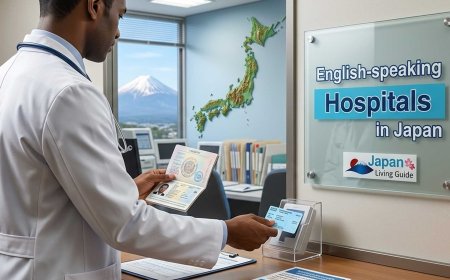
JNTO’s medical guide lets users search medical institutions by language, department, credit card availability, and category, including institutions selected by prefectures to support foreign emergency patients requiring hospitalization.
This is helpful not only for tourists, but also for residents who need English, Chinese, Korean, Portuguese, Spanish, or other language support depending on location.
Still, do not assume every hospital has interpreters. Some hospitals clearly state that they do not have foreign-language interpreters and recommend coming with someone who can speak Japanese. Tokyo Metropolitan Bokutoh Hospital, for example, says its hospital does not have foreign-language interpreters and asks patients to come with a Japanese speaker if possible.
The safest habit is to prepare:
- A list of symptoms
- Medicine names
- Allergy information
- Existing conditions
- Emergency contact
- Insurance information
- A translation app or printed medical questionnaire
What to Bring When You Get Medical Care
Before going to a clinic or hospital, prepare your documents. Forgetting one small item can make the visit more stressful.
| Item | Why You Need It |
|---|---|
| Health insurance card / My Number health insurance | To avoid paying full cost upfront |
| Residence card | Identification, especially for foreign residents |
| Cash or payment card | Some clinics may not accept all cashless payments |
| Medicine list | Prevents dangerous combinations |
| Allergy information | Essential for safe treatment |
| Symptom notes | Helps communication |
| Referral letter | Needed for some hospitals |
| Emergency contact | Useful for serious cases |
If you have public health insurance, most covered treatment is discounted at the counter. If you forget your insurance information, you may need to pay the full amount first and apply for reimbursement later.
How Much Does Healthcare Cost in Japan?
How Much Will It Cost?
For insured residents, many medical visits are affordable because patients usually pay only part of covered costs. Japan’s public insurance system generally means working-age adults pay around 30% of covered medical expenses, while insurance covers the rest. This is why a local clinic visit may cost only a few thousand yen, depending on tests and prescriptions.
Emergency visits can cost more, especially at night, on weekends, or at large hospitals. Some hospitals charge additional after-hours fees for non-critical patients. Showa Medical University Hospital states that after-hours patients deemed non-critical may be charged an After-hours Selective Medical Care Charge of ¥8,800 tax included.
Uninsured foreigners may face much higher costs. Medical caregivers in Japan may require payment in full at the time of treatment or concrete proof of ability to pay before treating a foreigner who is not enrolled in Japanese public health insurance.
That is why residents should not delay health insurance enrollment.
Common Mistakes Foreigners Make When Sick in Japan
One common mistake is going straight to a large hospital for a mild illness. This may lead to longer waits, extra fees, or being redirected. For ordinary symptoms, start with a local clinic whenever possible.
Another mistake is not calling ahead when you have fever or infectious symptoms. Clinics may have special procedures, separate entrances, or appointment rules.
Some foreigners also forget to bring insurance information. That small mistake can make payment complicated.
The biggest mistake is waiting until illness happens before learning the system. When you are already sick, tired, or in pain, every Japanese form feels harder. Prepare now while you are healthy.
Prepare Before Your Body Forces You To
Getting sick in Japan does not have to become a crisis. The system can work well if you know how to use it. For mild symptoms, visit a local clinic. For serious but non-life-threatening problems, call ahead or use medical consultation services. For emergencies, call 119. For language support, use JNTO medical search, visitor hotlines, or local international medical information centers.
Healthcare is one of those parts of life that feels boring until the day it becomes urgent. Prepare your insurance, save emergency numbers, learn your nearest clinic, and keep your medical information organized. Your future sick self will be grateful that your healthy self planned ahead.
Prepare Smarter, Live Better in Japan (FREE Download)
Download the First 7 Days in Japan Checklist (FREE)
Don’t guess what to do — follow a proven plan.
Download your FREE “First 7 Days in Japan Checklist” PDF now:
✔ Instant download
✔ Mobile-friendly
✔ Printable
Want the COMPLETE Version? (Premium Upgrade)
If you want a deeper, more powerful guide, there’s also a premium version available on Gumroad.
Nipino.com is committed to providing you with accurate and genuine content. Let us know your opinion by clicking HERE.