










































































Japan Permanent Residence Rules 2026: Income, Pension & Tax Requirements for Foreigners
Japan is moving toward stricter and clearer screening standards for foreign residents applying for permanent residence, including greater attention to income, pension records, taxes, and other public obligations. For foreigners planning to apply for PR, keeping clean financial and administrative records may become more important than ever.

Is Permanent Residence in Japan Getting Harder?
For many foreigners living in Japan, permanent residence is the ultimate long-term goal.
A permanent resident does not need to renew a normal work-based status of residence every few years, and permanent residence provides considerably more flexibility in employment and daily life.
But getting PR has never simply been a matter of living in Japan for a certain number of years.
Applicants are already expected to meet requirements relating to conduct, financial stability, residence history, and the proper fulfillment of public obligations.
Now, Japan is moving toward clearer and potentially stricter standards for permanent residence.
The Immigration Services Agency has been working on revisions to its Guidelines for Permission for Permanent Residence, with proposed changes attracting considerable attention in 2026.
Reported proposals include greater emphasis on:
- Income
- Pension records
- Tax payments
- Public obligations
- Japanese-language ability
- Understanding of Japanese institutions and rules
The details are important because these changes do not mean that every foreign resident will suddenly need to meet one identical income level or that existing PR holders automatically lose their status.
The practical message for people planning to apply is simpler:
Start keeping your financial and administrative records in order before you apply.
What Is Permanent Residence in Japan?
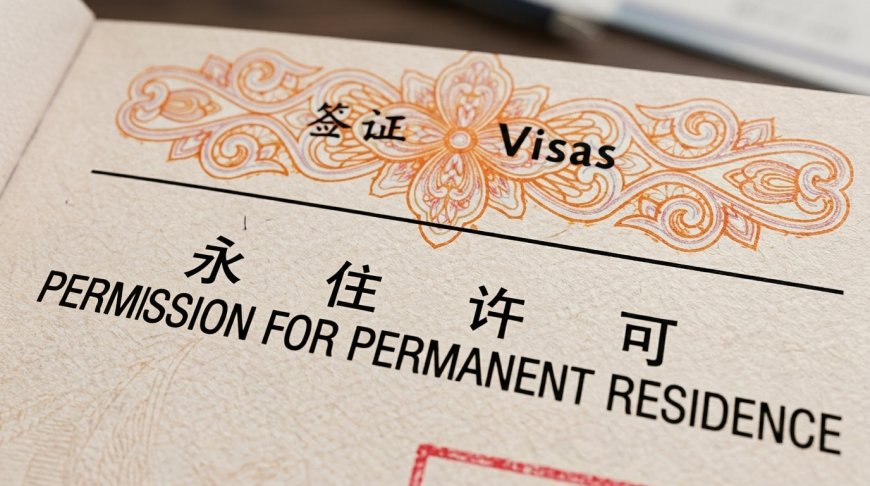
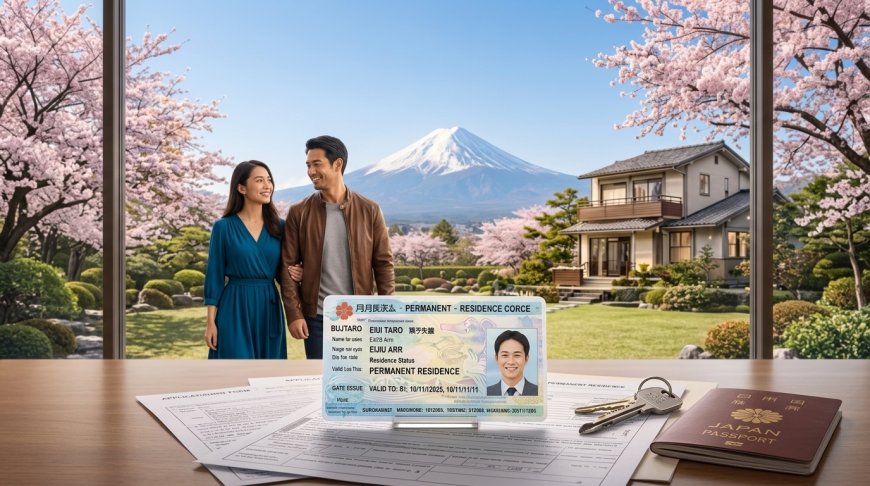
Permanent residence, or 永住権 (えいじゅうけん), allows a foreign national to live in Japan without being tied to a particular work or activity-based status of residence.
The official status is called Permanent Resident (永住者 / えいじゅうしゃ).
Unlike many work-related statuses, permanent residents have much greater freedom regarding employment because they are not restricted to a particular type of activity or employer in the same way as many work-based statuses.
However, permanent residence is not the same as Japanese citizenship.
A permanent resident remains a foreign national.
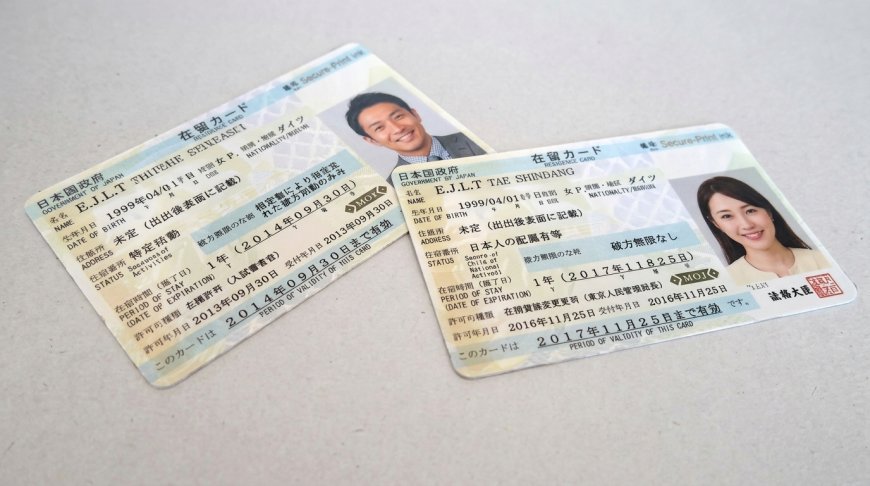
You continue to use your foreign passport and residence card and remain subject to Japan's immigration system.
If you are unfamiliar with the different categories, our Japan Status of Residence guide for foreigners explains the basic differences between common residence statuses.
What Are the Current General PR Requirements?
Under the current official guidelines, permanent residence generally involves three broad areas:
1. Good Conduct
Applicants are expected to comply with Japanese laws and live in a manner that is not socially objectionable.
2. Financial Independence
Applicants should be able to maintain a stable life without becoming a burden on public finances.
3. Japan's National Interest
The applicant's permanent residence must be considered to be in Japan's national interest.
Under the general rule, an applicant is expected to have continuously lived in Japan for 10 years, including at least five years with an appropriate work or residence status, subject to exceptions.
Applicants are also expected to fulfill public obligations such as tax payments.
The Immigration Services Agency's published guidelines also state that applicants generally need the longest period of stay available for their status, although a three-year period is currently treated as satisfying the maximum-period requirement during the transitional handling described in the guidelines.
These are the existing framework requirements.
The proposed revisions would make some aspects of the assessment more explicit.
Is Japan Still Affordable in 2026? Real Cost of Living Explained
Why Is Income Becoming More Important?
One of the most widely reported changes concerns income.
Reports on the draft revisions say Japan plans to make income requirements clearer and may assess whether an applicant's income is above the average level for Japanese households.
This is important because many foreigners have historically thought about PR primarily in terms of:
"Have I lived in Japan long enough?"
The proposed approach puts more attention on another question:
"Can I demonstrate stable financial independence?"
That does not mean every applicant will necessarily have to earn exactly the same amount.
Household circumstances, dependents, assets, and other factors can matter.
Reported draft proposals have also indicated that savings and other assets could potentially help compensate where projected pension benefits fall below the relevant level.
The precise implementation matters, and applicants should check the final official guidance once it is issued.
Why Are Pension Payments Important?
Pension is another area that foreign residents should pay close attention to.
If you work in Japan, you may be enrolled in:
- Employees' Pension Insurance (厚生年金 / こうせいねんきん)
- National Pension (国民年金 / こくみんねんきん)
Your circumstances determine which system applies.
The proposed PR changes reported in 2026 include a stronger focus on projected pension benefits.
One reported approach would examine whether an applicant's projected pension benefits are equivalent to the benefits that would be expected after 30 years of enrollment in an employees' pension program at the relevant income level.
Again, this is part of the proposed/revised framework rather than something applicants should treat as a simple universal "30-year pension requirement."
The important lesson is:
Do not ignore your pension record if you eventually want permanent residence.
What About Unpaid Pension?
This is already an important issue.
If you were required to pay pension contributions and failed to do so, that can create problems when your public-obligation record is assessed.
Foreign residents sometimes misunderstand the Japanese pension system because they expect to leave Japan eventually.
But if you are legally required to participate, simply ignoring the payments can create administrative and financial consequences.
If you are having difficulty paying, investigate whether you qualify for an official exemption or payment-deferment arrangement rather than simply leaving contributions unpaid.
Keep documentation showing what you paid and any exemption or deferment that was approved.
A clean record is much easier to explain than a history of unexplained missed payments.
Taxes Matter Too
Taxes are another major part of the PR picture.
Japan has several different taxes and public charges that can affect foreign residents, including:
- Income tax
- Resident tax
- Property-related taxes for property owners
- Other applicable local taxes
Your employer may withhold income tax from your salary, but that does not mean every tax obligation is automatically handled for you.
Resident tax, in particular, can be confusing for newcomers because it is generally based on the previous year's income and is administered by your municipality.
If you are unsure how resident tax works, read our guide to resident tax in Japan for foreigners.
The important point for a future PR applicant is simple:
Keep your tax obligations up to date and keep your records.
Even Small Administrative Problems Can Matter
People sometimes think:
"It's only a small unpaid bill."
But immigration screening is not necessarily based only on whether you have a large debt.
Public obligations can include taxes, pension, health insurance, and other required payments.
The Immigration Services Agency has already tightened PR screening in 2026, including greater scrutiny of applicants with histories of unpaid taxes and health insurance premiums, even where those amounts were subsequently paid.
That makes one principle especially important:
Paying late is not necessarily the same as having a clean record.
If you discover that you have missed a payment, deal with it properly.
Contact the relevant municipality, pension office, insurer, or tax authority.
Find out what you owe.
Pay it or arrange an official solution if one is available.
Keep the documentation.

What About Health Insurance?
Japan's public health insurance system is another area foreign residents should not ignore.
Depending on your circumstances, you may be enrolled in:
- Employees' Health Insurance
- National Health Insurance
- Another qualifying health coverage system
Premiums and procedures can vary depending on your situation and municipality.
If you are planning to apply for permanent residence, you should not treat health insurance payments as unrelated to your immigration history.
Recent PR screening changes have already increased attention to public obligations, including health insurance premiums.
If you have an unpaid balance, contact your insurer or municipality and resolve the issue rather than allowing it to remain unresolved.
Does Japanese Ability Affect Permanent Residence?
Japanese ability has also become part of the broader discussion around Japan's future permanent residence standards.
Reported draft revisions include consideration of Japanese-language ability and knowledge of Japanese institutions and social rules.
This does not mean that every foreign resident must suddenly pass a specific JLPT level to qualify for PR.
The final rules and assessment criteria matter.
However, the direction of the discussion is significant.
Japan is increasingly looking not only at whether someone has lived in Japan for a certain period, but also at whether the person is financially stable and able to participate in society.
For foreigners already living here, improving Japanese is therefore useful for more than passing a language test.
It can help with:
- Government procedures
- Workplace communication
- Banking
- Housing
- Healthcare
- Taxes
- Pension
- Emergency information
- Everyday community life
If you are working toward better Japanese, our guide on how much Japanese you need to build a career in Japan can help you think about language ability in practical terms.
What Does "Public Obligations" Mean?
This phrase appears frequently in discussions about permanent residence.
In practical terms, it can include responsibilities such as:
- Paying taxes
- Paying pension contributions
- Paying health insurance premiums
- Following Japanese laws
- Completing required administrative procedures
- Maintaining appropriate residence records
This is why someone preparing for PR should think about their entire history in Japan, not only the current year.
For example:
You might currently have a good salary.
You might currently have no unpaid bills.
You might currently have a stable job.
But if there were significant unresolved public obligations in previous years, they may still be relevant to the overall assessment.
A Higher Salary Does Not Automatically Guarantee PR
This is an important distinction.
It would be incorrect to assume:
"If I earn more than the reported income threshold, I will automatically get permanent residence."
PR screening involves multiple requirements.
Income is only one part of the picture.
Other considerations can include:
- Residence history
- Employment
- Financial stability
- Taxes
- Pension
- Health insurance
- Conduct
- Immigration history
- Appropriate residence status
- Family circumstances
- Other requirements and evidence
Meeting one criterion does not guarantee approval.
Likewise, having a lower income does not necessarily mean an applicant has no possible route to PR.
The final assessment depends on the applicable rules and the applicant's circumstances.
What Should Foreign Residents Do Now?
If you are thinking about applying for PR in the next few years, you do not need to panic.
Instead, start organizing your records.
1. Check Your Tax History
Confirm that your income tax and resident tax payments are up to date.
2. Check Your Pension Record
Review your pension contribution history.
If there are gaps, find out why.
3. Check Your Health Insurance
Make sure premiums are paid or that any official exemption/deferment is properly documented.
4. Keep Your Employment Records
Save:
- Employment contracts
- Payslips
- Tax certificates
- Withholding slips
- Employment history
5. Keep Residence Records
Maintain copies of important immigration documents and residence-related paperwork.
6. Build Financial Stability
Try to maintain consistent income and reasonable savings.
7. Improve Your Japanese
Even if a specific JLPT requirement does not apply to your situation, better Japanese can make administrative procedures much easier.
8. Avoid Immigration Violations
Follow the conditions of your current status of residence.
9. Keep Important Documents Organized
Don't wait until you are preparing the PR application to start searching for documents from several years ago.
10. Check Official Information Before Applying
The rules are changing, so use the Immigration Services Agency's current guidance when preparing an application.
A Simple PR Preparation Checklist
If permanent residence is one of your long-term goals, use this checklist:
☐ Stable employment or reliable income
☐ Tax payments up to date
☐ Resident tax payments up to date
☐ Pension payments up to date
☐ Health insurance payments up to date
☐ No unresolved immigration violations
☐ Residence history documented
☐ Employment history documented
☐ Payslips and tax documents organized
☐ Pension record checked
☐ Important residence documents saved
☐ Japanese ability improving
☐ Emergency savings maintained
☐ Current PR guidelines checked before applying
This is not a guarantee of approval.
It is simply a practical way to reduce avoidable problems.
What About People Who Are Already Permanent Residents?
The discussion about stricter requirements is particularly relevant to people applying for permanent residence.
It should not be interpreted as meaning that every existing permanent resident will automatically lose PR because of the proposed applicant requirements.
Japan is also developing separate rules concerning circumstances under which permanent resident status can be affected or revoked, so existing permanent residents should follow official announcements if those rules are relevant to their situation.
For everyone else, the key distinction is:
Applying for PR and already holding PR are different situations.
Do not assume that a news report about new application standards automatically changes the rights of every person who already has permanent residence.
What Happens to Applications Submitted Before a Rule Change?
This is another reason to be careful with headlines.
Immigration rules can involve:
- Draft proposals
- Public consultation
- Finalized guidelines
- Cabinet or ministerial decisions
- Effective dates
- Transitional arrangements
A news article saying that Japan "will require" something does not necessarily mean that the requirement is already legally applicable to every application.
As of September 2026, the Immigration Services Agency is still discussing the revision of its permanent residence guidelines. Its September 16 policy meeting specifically included an agenda item concerning revision of the permanent residence guidelines and guidelines concerning cancellation of permanent resident status.
Therefore, anyone preparing an application should check the latest official guidance at the time of filing.
PR Application Fees Are Also Changing
There is another change that prospective applicants should know about.
The Immigration Services Agency announced that residence-related fees will be revised from October 1, 2026.
For permanent residence, the fee listed by the agency will become ¥200,000 for applications submitted on or after October 1, 2026 and subsequently approved.
The agency specifically states that applications accepted by September 30, 2026 will remain subject to the previous fee even if approval occurs after October 1.
This is separate from the substantive eligibility requirements.
So if you are preparing a PR application around the September–October 2026 transition, pay attention to both:
eligibility rules and application fees.
Should You Apply Before the New Rules?
This is where caution is important.
If you are already eligible and have been preparing your application, it may be sensible to obtain professional advice about your specific situation and the applicable rules.
But it would be a mistake to assume that simply submitting an application before a particular date guarantees that an applicant will be assessed under every old criterion.
The applicable rules, effective dates, transitional provisions, and the date an application is formally accepted can matter.
If your situation is complicated—such as previous unpaid taxes, pension gaps, long periods outside Japan, changes of employment, family circumstances, or unusual residence history—consider consulting an immigration lawyer or registered immigration procedures specialist (行政書士 / ぎょうせいしょし).
The Biggest Lesson: Start Preparing Early
Permanent residence is not something you should begin preparing for one month before applying.
If you think you may want PR three or five years from now, your preparation starts today.
Every month you:
- Pay your taxes
- Pay your pension
- Pay your health insurance
- Maintain stable employment
- Follow immigration rules
- Improve your Japanese
- Save important documents
you are creating a clearer record of your life in Japan.
That record may become increasingly important as Japan introduces more explicit standards for permanent residence.
Guidelines Already Existing in Japan
Permanent residence has always been more than a simple "10-year rule."
Japan's existing guidelines already consider conduct, financial independence, public obligations, residence history, and other factors.
The changes being discussed in 2026 could make some of those expectations clearer and place greater attention on income, pension, language ability, and compliance with public obligations.
For foreign residents, the practical response is not to panic.
It is to prepare.
Check your taxes.
Check your pension.
Check your health insurance.
Keep your documents.
Maintain stable income.
Improve your Japanese.
Follow the rules attached to your current status of residence.
And most importantly, check the official requirements again when you are actually ready to apply.
Japan's permanent residence system is evolving.
If PR is part of your long-term plan, the best time to start building a clean record is before you need it.
Important Disclaimer: This article is for general informational purposes only and does not constitute legal, financial, immigration, medical, or professional advice. Rules, costs, weather conditions, and local procedures can change, so always confirm important information with the relevant government office, municipality, employer, or other official source.
For more practical Japan living guides, explore related resources like the Living in Japan, Japan Starter Toolkit, and Everyday Japanese for Beginners.
Prepare Smarter, Live Better in Japan (FREE Download)
Download the First 7 Days in Japan Checklist (FREE)
Don’t guess what to do — follow a proven plan.
Download your FREE “First 7 Days in Japan Checklist” PDF now:
✔ Instant download
✔ Mobile-friendly
✔ Printable
Want the COMPLETE Version? (Premium Upgrade)
If you want a deeper, more powerful guide, there’s also a premium version available on Gumroad.
Nipino.com is committed to providing you with accurate and genuine content. Let us know your opinion by clicking HERE.