

































































Japan Plans New Japanese Language Program for Foreign Residents
Japan has begun discussing a new program that would help foreign residents learn Japanese while also teaching them about everyday rules, public systems, and life in the country. The proposed program could become an important part of Japan's changing approach to immigration and integration.
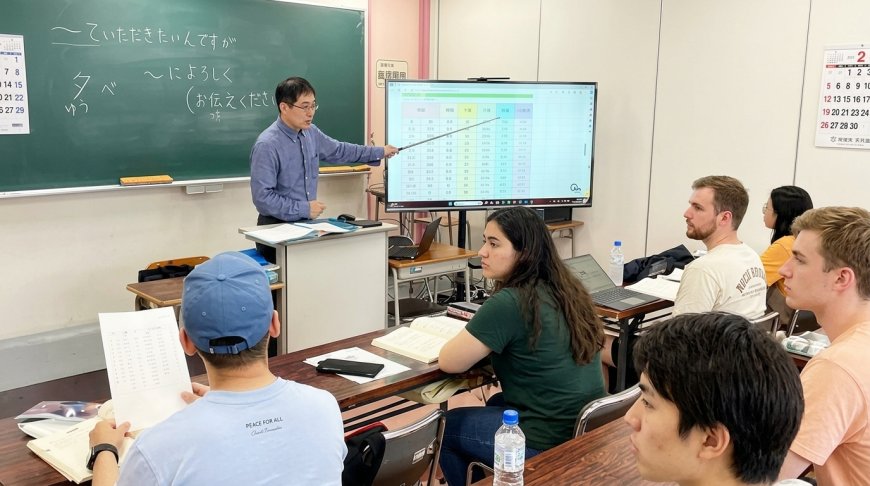
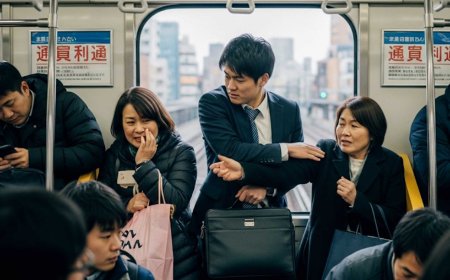
Japanese Language Program for Foreigners
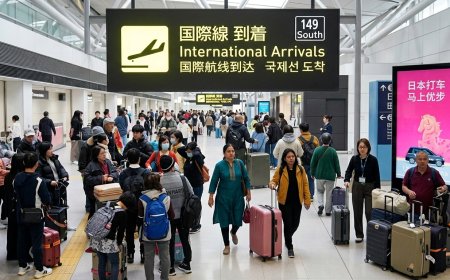
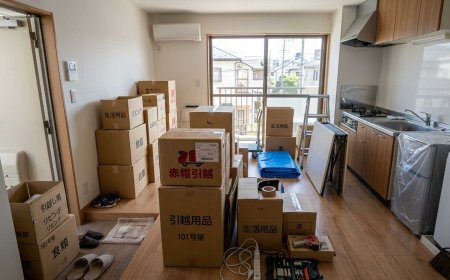
For many foreigners, moving to Japan involves learning much more than a new language.
There are residence procedures to understand, taxes to pay, health insurance and pension systems to navigate, garbage separation rules to follow, workplace expectations to learn, and countless unwritten customs that can make everyday life confusing.
Japan's government is now considering a new approach that could address some of these challenges.
In August 2026, the Japanese government began discussions on creating a new learning program for foreign residents that would combine Japanese-language education with information about Japanese society, public systems, and everyday rules.
The initiative is still in the planning stage, but if implemented, it could represent an important change in how Japan helps foreigners build long-term lives in the country.
So what exactly is Japan planning, who could be affected, and could this eventually become important for foreigners seeking long-term residence?
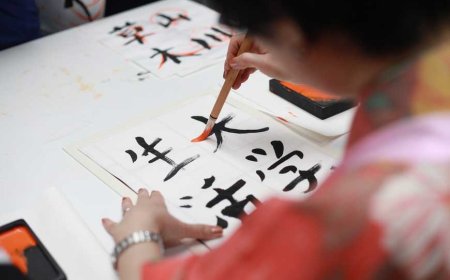
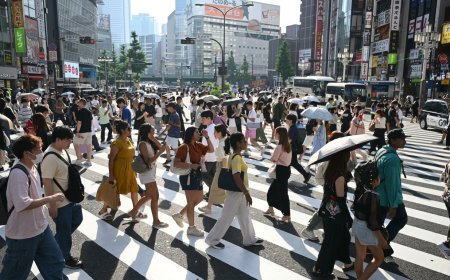
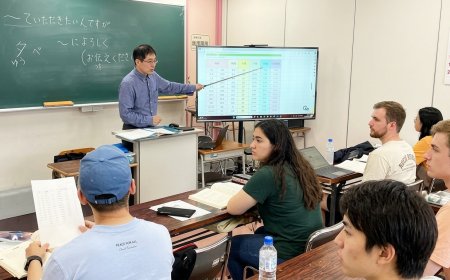
Learning the Japanese Language
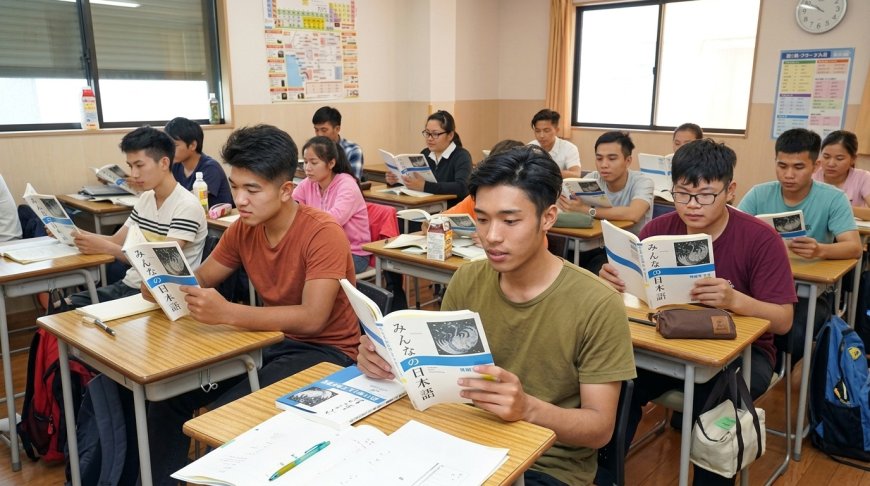
What Is Japan's New Program for Foreign Residents?
On August 18, 2026, a Japanese government working group held its first meeting to discuss the creation of a new learning program for foreign residents.
The idea is broader than simply offering Japanese lessons.
The proposed program would reportedly help foreign residents learn two major things:
Japanese language skills and knowledge about Japanese society, systems, and rules.
This distinction is important.
Someone can study Japanese vocabulary and grammar for years and still struggle to understand how Japanese health insurance works, how taxes are paid, what documents arrive from city hall, or what responsibilities residents have in their local communities.
The proposed program appears to recognize that successful integration requires more than being able to speak Japanese.
Foreign residents also need to understand how life in Japan actually works.
The government is reportedly aiming to introduce a trial version of the program in fiscal 2028.
However, many details—including the exact curriculum, eligibility requirements, assessment system, and how participation might eventually relate to immigration procedures—are still being discussed.
Why Is Japan Considering This Program?
Japan's foreign population has grown considerably over the years.
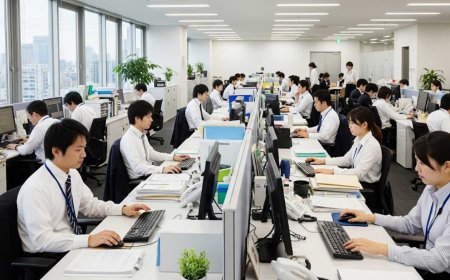
Foreign workers are increasingly visible in industries ranging from manufacturing and construction to hospitality, agriculture, food services, healthcare, education, and information technology.
International students are also studying at universities, vocational schools, and Japanese-language schools throughout the country.
Many eventually find employment and continue living in Japan.
This means Japan is no longer dealing only with foreigners who temporarily come to the country for short-term work.
A growing number are building careers, raising families, paying taxes, renting or buying homes, and becoming long-term members of Japanese communities.
That creates a different challenge.
It is one thing to bring workers into the country.
It is another to help them successfully live in Japanese society.
Language barriers can make even simple tasks difficult.
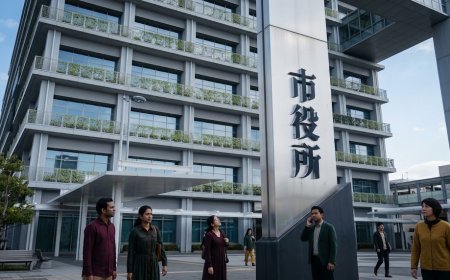
A letter from city hall can become stressful when someone cannot understand what it says. A worker may not understand an employment document. A new resident might accidentally violate garbage collection rules simply because nobody explained them.
These problems may appear small individually, but together they can create frustration for both foreign residents and local communities.
A structured learning program could potentially reduce some of those difficulties.
It May Teach More Than Japanese Grammar
One of the most interesting aspects of the proposal is its apparent focus on daily life and social systems.
Traditional Japanese courses often concentrate on vocabulary, grammar, kanji, reading, listening, and conversation.
Those skills are obviously important.
But someone living in Japan also needs practical knowledge.
For example, a useful program for foreign residents could potentially explain topics such as:
- Residence procedures
- Taxes
- National Health Insurance
- Employees' Health Insurance
- Pension contributions
- Employment rules
- Garbage disposal
- Disaster preparedness
- Local government services
- Schools and education
- Housing rules
- Community responsibilities
- Basic laws and regulations
- Japanese social customs
The final curriculum has not yet been determined, so foreigners should not assume that all of these subjects will necessarily be included.
Nevertheless, the government's discussions suggest that the program is intended to help participants understand both the Japanese language and how Japanese society functions.
That could make it considerably more practical than an ordinary language course.
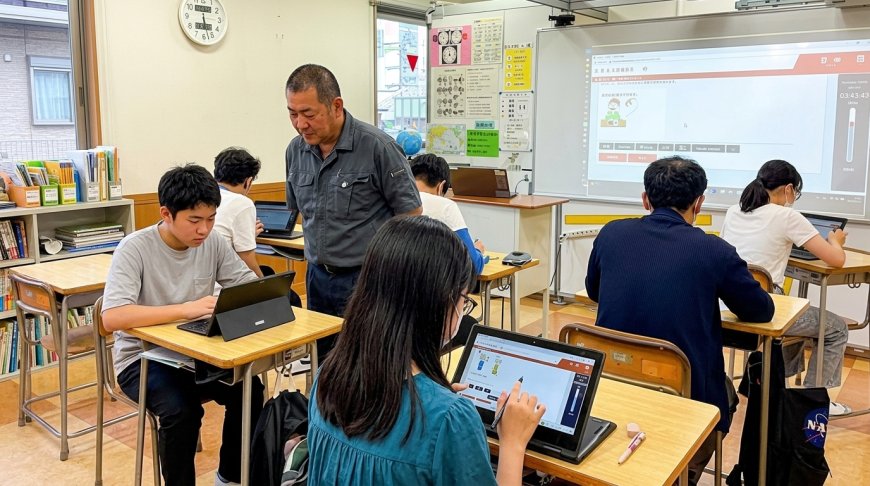
Could It Affect Permanent Residency in Japan?
This is likely to become one of the biggest questions among long-term foreign residents.
Could completing the program eventually become relevant when applying for Permanent Residence (永住・えいじゅう)?
At this stage, foreigners should be careful about jumping to conclusions.
The program is still being developed, and the government has not established a final system that automatically makes completion a requirement for permanent residency.
However, discussions surrounding the initiative have included the possibility of examining how learning and integration could relate to residence screening in the future.
That makes the development worth watching.
Japan has traditionally placed considerable emphasis on factors such as a person's residence history, conduct, income, tax payments, pension contributions, social insurance obligations, and stability when evaluating long-term residence.
Language ability has not historically functioned in exactly the same way as formal language requirements found in some other immigration systems.
The new discussions suggest that Japan may increasingly consider integration into Japanese society as an important part of long-term immigration policy.
But until official rules are finalized, foreign residents should treat claims that a Japanese-language examination is definitely becoming mandatory for permanent residency with caution.
Japan Needs Foreign Workers—but Also Wants Better Integration
There is an interesting contradiction developing in Japan.
On one side, the country needs foreign workers.
Japan continues to face demographic challenges caused by an aging population and declining birthrate.
Many industries already depend heavily on international workers.
On the other side, the Japanese government is increasingly discussing how foreign residents should integrate into local communities and understand Japanese rules and responsibilities.
These two developments are not necessarily contradictory.
They may actually represent the next stage of Japan's immigration policy.
The first stage was largely:
How can Japan bring in enough foreign workers?
The next question may increasingly become:
How can Japan help foreign residents successfully become part of Japanese society?
That is a much more complicated challenge.
Employment alone does not guarantee integration.
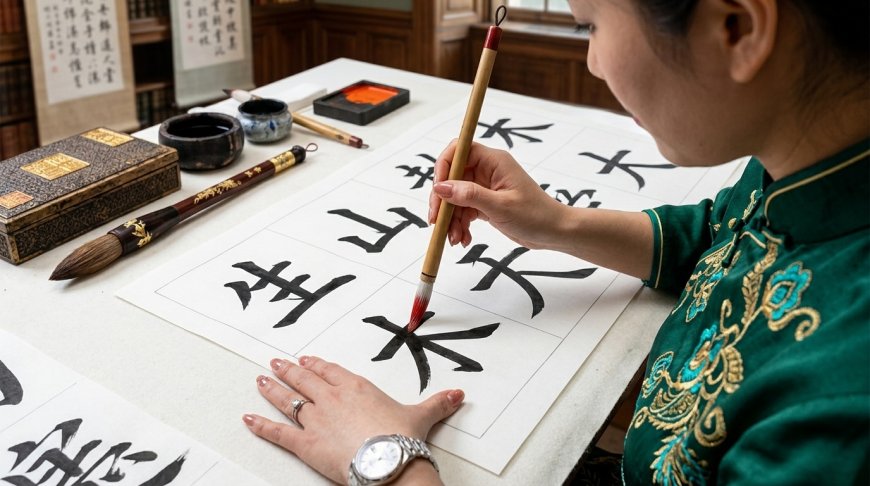
Japanese Ability Matters Outside the Workplace
Foreigners sometimes think about Japanese ability mainly in terms of employment.
Questions often sound like:
"Do I need N2 to get this job?"
"Can I work in Japan with N3?"
"Can I find an English-speaking company?"
Those are reasonable questions.
But anyone planning to live in Japan for many years eventually discovers that Japanese ability affects much more than employment.
It affects independence.
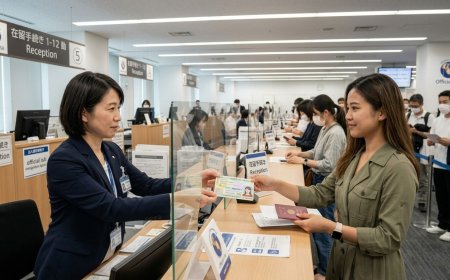
Imagine receiving an important letter from the municipal office.
A person with limited Japanese may photograph it, translate it using an app, ask a friend, or bring it to someone who can explain it.
Technology has made this much easier than it once was.
But being able to understand at least the basic meaning independently provides another level of confidence.
The same applies when speaking with a landlord, visiting a hospital, attending a child's school meeting, contacting a utility company, discussing a problem at work, or asking questions at city hall.
Japanese ability gradually changes a foreign resident from someone who constantly needs assistance into someone who can navigate much more of Japanese society independently.
What Should Foreign Residents Do Now?
There is no reason to panic or suddenly register for an expensive Japanese course because of this announcement.
The proposed government program is still being developed, and a trial is not expected until fiscal 2028.
However, foreigners who intend to build a long-term future in Japan can take the announcement as another reason to gradually improve their Japanese.
Instead of studying only for the JLPT, it may be useful to study practical Japanese for real life.
Learn the vocabulary that appears on documents.
Understand words related to taxes.
Learn how health insurance works.
Become familiar with pension terminology.
Practice communicating at city hall.
Learn how to read basic employment documents.
Understand the Japanese used when renting an apartment.
These skills can be valuable regardless of what happens with the proposed government program.
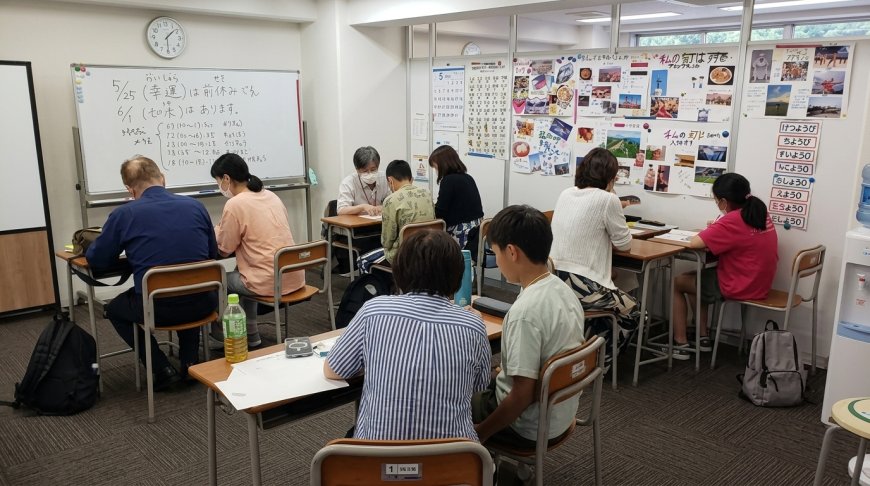
Practical Japanese May Become More Important Than Ever
The JLPT will probably continue to be an important benchmark for Japanese-language ability, particularly when looking for employment.
But everyday life requires a slightly different type of Japanese.
Someone might recognize difficult kanji on a test yet struggle to explain a leaking pipe to a landlord.
Another person might have excellent conversational Japanese but have no idea what a 納税通知書 (のうぜいつうちしょ), or tax payment notice, means.
Living successfully in Japan requires both language ability and practical knowledge.
That is what makes the government's proposed program particularly interesting.
Rather than treating language education and social integration as completely separate issues, Japan appears to be exploring ways to connect them.
What This Could Mean for Japan's Future
Japan's relationship with immigration is changing.
The country still does not describe itself as a traditional immigration nation in the same way as countries such as Canada or Australia.
Nevertheless, the reality on the ground is changing.
Foreign residents are becoming increasingly important members of Japanese workplaces and communities.
As that population grows, Japan will need systems that do more than simply issue residence cards and work permissions.
It will need ways to help people understand the society they are joining.
Language education is one part of that process.
Understanding taxes, healthcare, employment rights, laws, community rules, disaster preparedness, and everyday responsibilities is another.
If Japan successfully creates a practical and accessible program covering these areas, it could make life easier not only for foreign residents but also for municipalities, employers, schools, and local communities.
The details will determine whether the program becomes genuinely useful or simply another administrative requirement.
For now, it is something foreign residents should watch carefully.
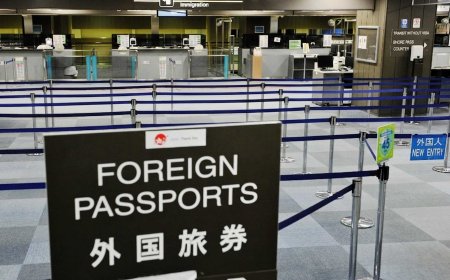
Understanding Japan—and its Society
Japan's proposed Japanese-language and social learning program is still years away from full implementation, and many important details remain undecided.
What is already clear, however, is the direction of the discussion.
Japan is increasingly looking beyond the question of simply bringing foreign workers into the country.
The larger question is becoming:
How can foreigners build sustainable lives as members of Japanese society?
For people who plan to stay in Japan long term, learning Japanese is therefore becoming more than a way to improve employment opportunities.
It is a tool for independence.
It helps people understand the letters arriving in their mailbox, communicate with local government offices, manage their finances, solve everyday problems, build relationships, and participate more confidently in their communities.
Whatever final form the government's new program takes, that reality is unlikely to change.
For foreigners building a future in Japan, understanding the language—and understanding the society behind it—may become more valuable than ever.
For more practical Japan living guides, explore related resources like the Living in Japan, Japan Starter Toolkit, and Everyday Japanese for Beginners.
Prepare Smarter, Live Better in Japan (FREE Download)
Download the First 7 Days in Japan Checklist (FREE)
Don’t guess what to do — follow a proven plan.
Download your FREE “First 7 Days in Japan Checklist” PDF now:
✔ Instant download
✔ Mobile-friendly
✔ Printable
Want the COMPLETE Version? (Premium Upgrade)
If you want a deeper, more powerful guide, there’s also a premium version available on Gumroad.
Nipino.com is committed to providing you with accurate and genuine content. Let us know your opinion by clicking HERE.