















































































How Much Japanese Do You Need to Build a Career in Japan?
How much Japanese do foreign workers really need to build a career in Japan? Learn the practical Japanese level needed for different jobs, JLPT goals, and career growth.

How much Japanese do I really need
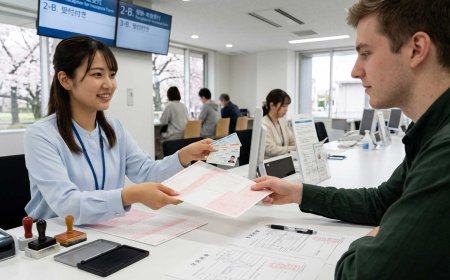
The answer depends on what kind of life and career you want. If your goal is simply to survive daily life, basic Japanese may be enough. You can shop, ride trains, follow simple instructions, and handle basic workplace communication. But if your goal is to build a stronger career, change jobs, get promoted, work in an office, manage people, deal with customers, or earn more, then Japanese becomes more than a language. It becomes career power.
Japan now has more foreign workers than ever. In 2025, the number reached 2.57 million, another record high. That means opportunities are growing, but competition is also growing. Employers are no longer just asking, “Can this person work?” They are also asking, “Can this person communicate, understand instructions, fit into the team, and grow with the company?”
That is where Japanese ability becomes important.

You Can Work in Japan With Basic Japanese, But Career Growth Is Different
Let’s be realistic. Many foreign workers in Japan are working with limited Japanese. Some factory jobs, cleaning jobs, food-processing jobs, construction-related roles, hotel back-end roles, and English-teaching jobs may not require advanced Japanese at the beginning.
But there is a difference between getting a job and building a career.
Basic Japanese may help you enter the workplace. Intermediate Japanese helps you understand instructions. Business Japanese helps you negotiate, report problems, join meetings, write emails, and become trusted with responsibility.
Think of Japanese ability like a key. Basic Japanese opens the front gate. Better Japanese opens more rooms inside the building.
JLPT Levels Explained for Career Planning
The Japanese-Language Proficiency Test, or JLPT, is one of the most recognized Japanese tests for non-native speakers. The Japan Foundation describes it as a widely recognized benchmark used across corporate and government sectors.
Here is a practical way to understand the levels:
| JLPT Level | Practical Meaning for Work | Career Usefulness |
| N5 | Basic words, greetings, simple sentences | Good starting point, but limited for work |
| N4 | Simple daily conversation and instructions | Useful for basic workplace survival |
| N3 | Everyday communication and some workplace understanding | Strong minimum target for many workers |
| N2 | Business-level reading, listening, and communication | Often expected for office and professional jobs |
| N1 | Advanced Japanese for complex work, documents, and leadership | Strong advantage for career growth |
Waseda University’s career material for international students notes that many Japanese companies expect JLPT N1 or N2 because Japanese is needed for daily business operations and communication inside and outside the organization.
That does not mean everyone needs N1. But it does mean that if you want more choices, N2 is a powerful goal.

How Much Japanese Do Different Jobs Usually Need?
Not every job requires the same Japanese level. A software developer in an international company may survive with English and basic Japanese. A caregiver, office worker, salesperson, hotel front-desk staff, or team leader usually needs much more Japanese because the work involves people, documents, customers, and responsibility.
| Job Type | Suggested Japanese Level | Why It Matters |
| Factory / warehouse | N4–N3 | Understand safety rules, instructions, schedules |
| Caregiving | N3–N2 | Communicate with elderly people, families, coworkers |
| Hotel / hospitality | N3–N2 | Handle guests, complaints, reservations |
| Office work | N2 or higher | Emails, meetings, phone calls, documents |
| IT engineer | N3–N2 depending on company | Team communication and project discussion |
| English teacher | N4–N3 helpful, N2 stronger | Parent communication, school admin, career growth |
| Sales / customer service | N2 or higher | Polite language, customer trust, problem-solving |
| Management | N2–N1 | Meetings, reports, conflict handling, leadership |
This is why “How much Japanese do I need?” is not the best question. A better question is: “What kind of job do I want next?”

Why N3 Is the Turning Point
For many foreign workers, JLPT N3 is the first serious career milestone. At N3, you can usually understand more workplace conversations, read some notices, follow instructions better, and explain simple problems.
N3 does not make you fluent. But it helps you stop depending on guesses.
At work, guessing is dangerous. If you misunderstand safety instructions, delivery details, shift changes, customer requests, or supervisor comments, the mistake can become serious. N3 gives you a better foundation for real workplace communication.
For many workers in factories, caregiving, food service, hospitality, and local companies, N3 is a practical minimum goal.
Why N2 Opens More Career Doors
If N3 helps you survive and communicate, N2 helps you compete.
N2 is often the level where more professional jobs become realistic. Many office jobs, recruitment postings, interpretation-related roles, customer-facing roles, and career-change opportunities prefer or require N2. It shows employers that you can handle more than simple conversation.
N2 also helps with confidence. You can read contracts more carefully, understand company rules, join interviews more smoothly, and express your career goals with better nuance.
This matters because foreign workers are not only competing with other foreigners. In many roles, they are also competing with Japanese applicants. Your advantage may be your international background, English ability, Filipino cultural understanding, technical skills, or work ethic. But if your Japanese is too weak, employers may hesitate.

Japanese Is Not Only Grammar
Many learners focus too much on vocabulary, kanji, and grammar. Those are important, but workplace Japanese is also about timing, politeness, and situation.
For example, you need to know how to:
- Report a mistake politely
- Ask for clarification without sounding careless
- Use basic keigo with customers and managers
- Confirm instructions before starting work
- Write short professional messages
- Explain delays or problems calmly
A foreign worker who knows perfect textbook Japanese but cannot report problems clearly may still struggle. A worker with imperfect Japanese but good communication habits can become trusted faster.
Career Japanese is not just “Can I speak?” It is “Can I work smoothly with people?”
Can You Build a Career in Japan Without Strong Japanese?
Yes, but your options may be limited.
Some industries are more English-friendly, especially global IT, engineering, research, tourism, recruitment, and international education. Some foreign-owned companies also use English internally. Japan-dev and other hiring guides often point out that some tech jobs do not require JLPT, but stronger Japanese still improves your chances and expands your options.
So yes, you can build a career without advanced Japanese, but you need another strong advantage. That could be programming, design, engineering, sales, teaching, marketing, caregiving certification, business experience, or entrepreneurship.
If you have weak Japanese and weak technical skills, your options become narrow. If you have weak Japanese but strong professional skills, you still have a chance. If you have both strong Japanese and strong skills, your opportunities become much bigger.
Practical Japanese Study Plan for Busy Workers
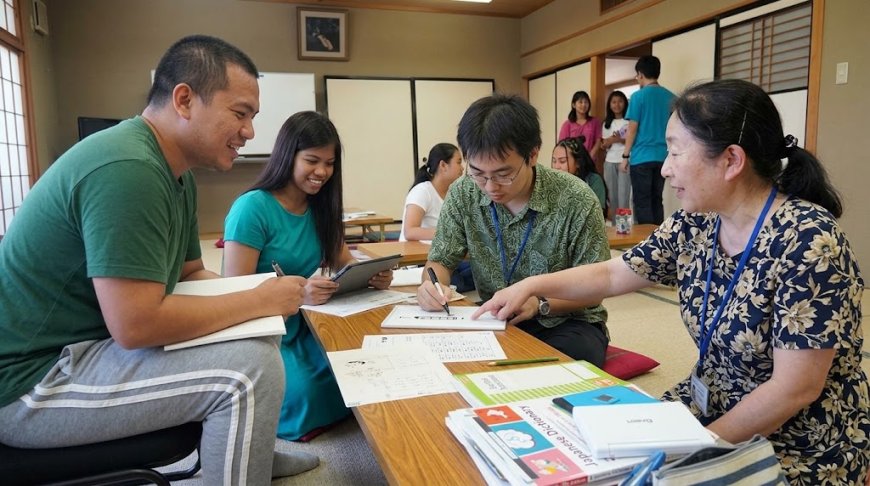
Many foreign workers are tired after work. Studying for three hours every night sounds nice, but it is not realistic for most people. The better strategy is small, consistent learning.
Start with work-related Japanese first. Learn the words you hear every day. Write down phrases from your supervisor. Practice common sentences you actually need. Study Japanese that solves your real problems, not only textbook examples.
A simple plan can look like this:
| Time | Study Task |
| 10 minutes before work | Review 5 workplace words |
| Break time | Listen to one short Japanese audio |
| After work | Write 3 sentences about your day in Japanese |
| Weekend | Study JLPT grammar and reading |
| Once a week | Practice speaking with a tutor or friend |
If your goal is career growth, do not only study for the test. Study for the workplace. The JLPT can help prove your level, but real communication helps you survive Monday morning.
Build Your Japanese Like You Build Your Future
So, how much Japanese do you need to build a career in Japan?
For basic survival, N4 may help. For stable workplace communication, N3 is a smart minimum target. For stronger job changes, office work, customer-facing roles, and long-term career growth, N2 is the level that opens more doors. For leadership, advanced professional work, and deep integration into Japanese companies, N1 gives you a serious advantage.
But do not wait until your Japanese is perfect before improving your career. Start where you are. Learn the words you need at work. Practice reporting, asking, confirming, and explaining. Build your skills step by step.
Japanese is not only a subject. It is a bridge. The better your bridge becomes, the farther you can go in Japan.
For more practical Japan living guides, explore related resources like the Living in Japan, Japan Starter Toolkit, and Everyday Japanese for Beginners.
Prepare Smarter, Live Better in Japan (FREE Download)
Download the First 7 Days in Japan Checklist (FREE)
Don’t guess what to do — follow a proven plan.
Download your FREE “First 7 Days in Japan Checklist” PDF now:
✔ Instant download
✔ Mobile-friendly
✔ Printable
Want the COMPLETE Version? (Premium Upgrade)
If you want a deeper, more powerful guide, there’s also a premium version available on Gumroad.
Nipino.com is committed to providing you with accurate and genuine content. Let us know your opinion by clicking HERE.