
























































The Night I Crossed Paths With a Young Girl Selling Roses in Malate
A deeply personal account of the night I met a little girl selling roses in Malate—an encounter that uncovered the harsh truth about child abuse and the painful cycle of exploitation that continues in our society.
My First Night Back Home as a Young Seaman
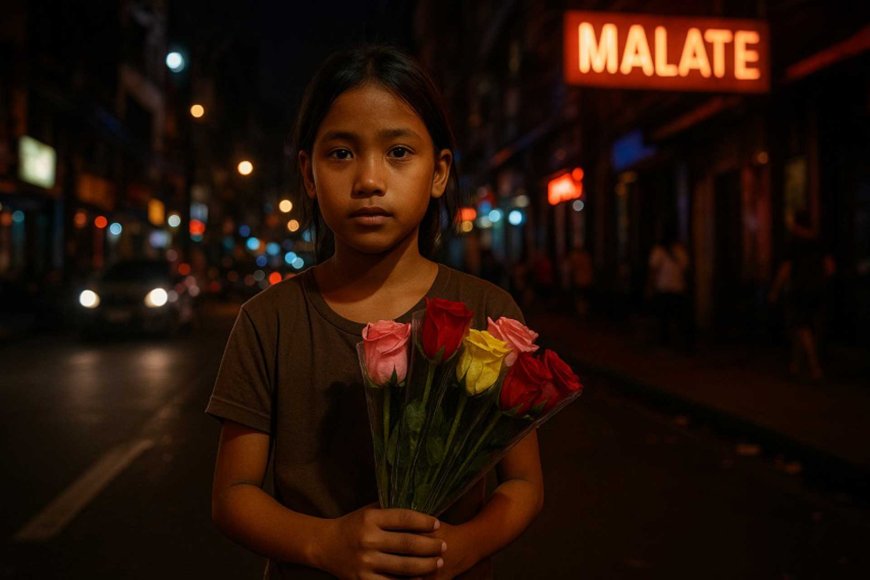
When I arrived back in the Philippines after a seven-month contract aboard an Italian ship, I was exhausted but excited. After months of routine, waves, and silence, all I wanted was to feel human again—to laugh, unwind, and simply breathe freely. So on my first night back, I decided to celebrate in my favorite spot in Malate, Manila.
My cousin came with me, and we picked a small place that served food and beer right on the sidewalk. I loved that kind of setup—cozy, open, alive. I could see everyone walking by, people just like us, looking for a good time or maybe an escape. It was already around 10:30 p.m., but Malate is Malate: loud, bright, busy, and always awake.
After a few beers and plates of pulutan (appetizers), something unexpected happened.
The Little Girl With Roses
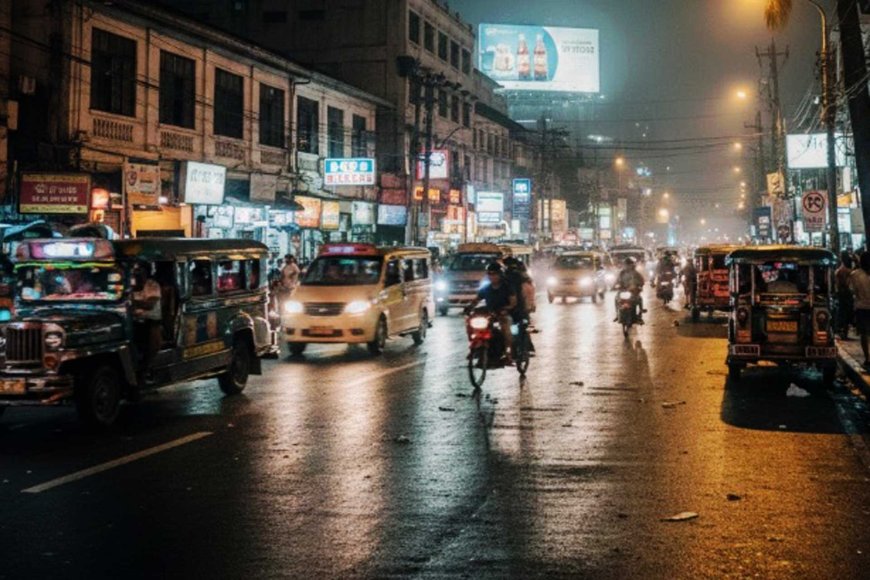
A small girl approached me, carrying a bunch of roses in her tiny arms.
“Kuya, bili na po kayo,” (Please buy some of my roses) she said.
Her voice was soft, tired. She couldn’t have been older than seven. What shook me more was the time—it was nearly midnight. What was she doing outside at that hour? Why was she in the middle of Malate, a place full of noise, drunks, strangers, and danger?
I felt sadness first, then anger—not at her, but at the situation she had been forced into.
“Magkano lahat?” (How much for all the roses?) I asked.
“₱100 po,” she replied.
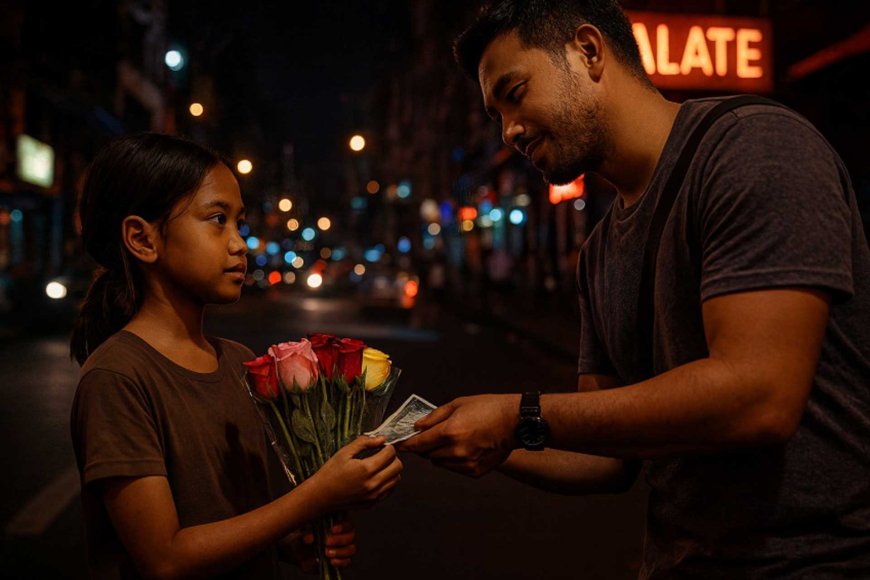
Without thinking twice, I took out my wallet, handed her ₱300, and told her, “Bibilhin ko lahat, pero umuwi ka na, ha?” (I'll buy them all, but you have to go home.)
She nodded. I didn’t even take the roses. I just wanted her to go home and sleep like any child should.
I believed I had done something good.
But a few minutes later, reality slapped me in the face.
The Mother and the Police Car
A police patrol car suddenly stopped near where we were sitting. At the same time, I saw a woman rushing from across the street into a bar beside us. She came out moments later dragging the same little girl—the one I thought had gone home.
My blood boiled.
I stood up immediately and confronted the woman.
“Anak mo ba ’yan?” (Is she your daughter?) I asked.
“Oo!” (Yes) she snapped back.
“Hindi ka na nahiya? Dinadala mo ’yung bata sa ganitong oras para magtrabaho? Dapat natutulog na siya!” (“Aren’t you ashamed? You’re letting that child work at this hour? She should be sleeping!”)
She glared at me and shouted,
“Wala kang pakialam! Hindi kita kilala!” (It's none of your business! I don't know you!)
Then she ran, pulling the child with her, disappearing into the crowd and darkness.
Only then did someone tell me there was a curfew for minors. That explained why she panicked when the police arrived. But it didn’t explain, nor justify, why she let her daughter sell roses at midnight while she hid in the shadows.
To me, it was simple: what I witnessed was child exploitation.

The Memory That Never Left Me
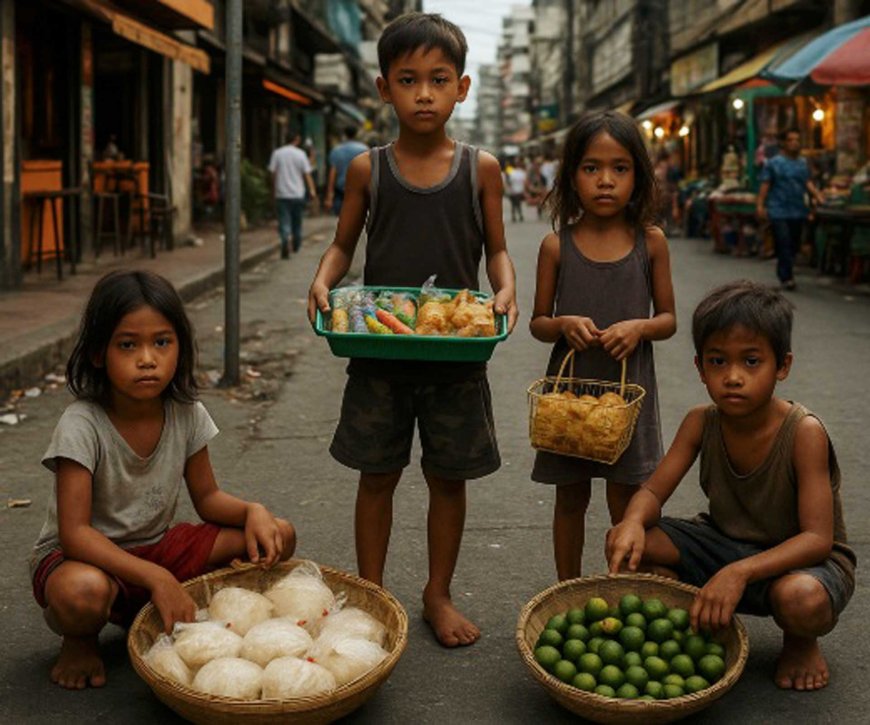
Twenty years have passed since that night, but the image of that girl—her tired eyes, her small hands clutching roses, her fear as her mother dragged her away—has stayed with me.
If my guess was right, she would be around 27 years old today. Maybe she’s a mother now. And I can’t help but ask myself:
Did she break free from that cycle?
Or did she grow up and repeat the same thing with her own child?
People often say I exaggerate.
That my imagination is too active.
That I shouldn’t think of the worst.
But how can I ignore something I’ve seen happen again and again?
In the streets.
In the news.
In real life.
Children who grow up abused often repeat the patterns:
Girls forced into prostitution.
Boys starting with petty crimes and ending up behind bars—or worse.
Children becoming parents who pass on the same trauma they lived through.
This isn’t fiction.
This is the Philippines.
This is our reality.
Why I Tell This Story
I share this memory not to dramatize my past, but to remind people of something important:
No child should be used, abused, or exploited—especially by their own blood.
We cannot stay silent just because:
“Hindi natin kaano-ano.” (We are not related to the child.)
or
“Hindi natin problema.” (It's not our business. )
Children have no power.
No protection.
No choice.
But we do.
When we refuse to speak up, we allow abuse to continue.
And the cycle repeats.
Again and again.
That night in Malate taught me something I never forgot:
One moment of courage, even from a stranger, can make a difference.
Apathy and silence never will.
Nipino.com is committed to providing you with accurate and genuine content. Let us know your opinion by clicking HERE.